AI, Philosophy & Thought News — 2026-10-14 (Wed) Evening News

Source links point to the original outlet. The AI Integrated Analysis is auto-generated from the headlines below only and is not intended to add facts beyond them. Not investment advice.
Overview
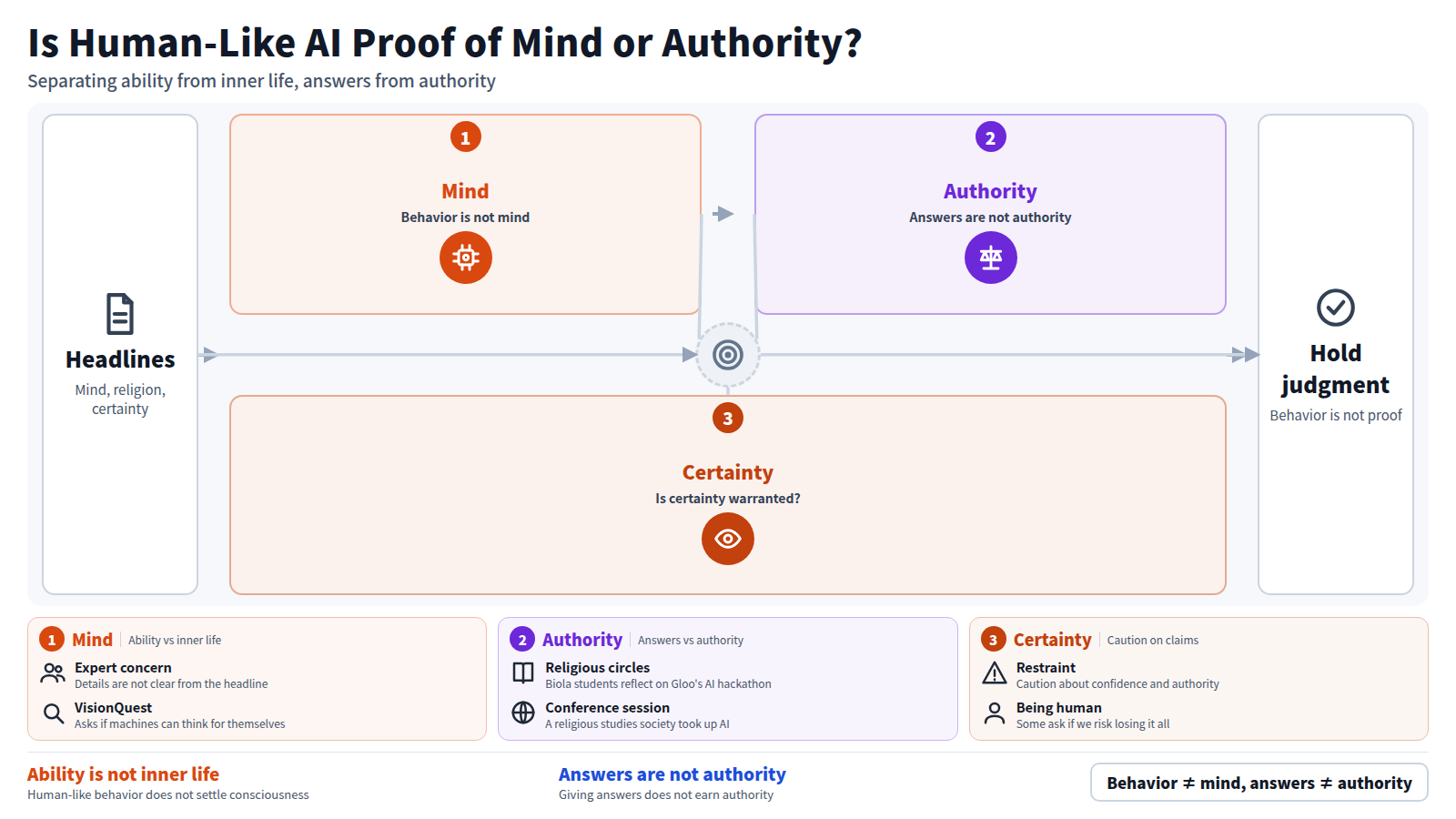
In the past 72 hours, the headlines centered on whether AI that behaves like a human can be said to be conscious, and on how much authority AI should be given in religious life. The material comes from science, technology and religious media, and none of the tracked figures (Yuval Noah Harari, David Chalmers, Shannon Vallor) appears in it. 【Philosophy of mind and consciousness】 - A report says AI can act exactly like a human, but we still don't think it's conscious. (Science Daily) - A report on Marvel's VisionQuest, which features AI inside a robot, asks whether machines can really think for themselves, and says science has something to say on the question. The headline is truncated. (Moneycontrol.com) - A column by Jessica Kaddy argues that on AI, certainty is dangerous. (TribLIVE.com)
What it means to be human
- An article asks whether, as AI learns and grows, we are at risk of losing it all. (The South First) - A report says a Caribbean voice has entered the global AI conversation, challenging views on technology and humanity. (The Daily Herald)
Knowledge and truth
No notable developments. 【Free will, responsibility and agency】 No notable developments. 【Statements from thinkers and intellectuals】 - Columnist Jessica Kaddy's piece, listed under section 2, argues that certainty about AI is dangerous. (TribLIVE.com) 【Religion and spirituality and AI】 - OpenAI CEO Sam Altman warns against giving AI religious authority. (Movieguide) - Biola University students reflect on Gloo's 2026 AI Hackathon, under the headline "We're Doing This for the Lord". (ChurchLeaders)
Thought on humanity's future
No notable developments.
Japanese thought and AI
- A European religious studies society's annual conference held a breakout session themed on AI and Soka Gakkai. (Seikyo Shimbun) - ZDNET Japan reports on why experts voice concern over the question of whether AI has consciousness. (ZDNET Japan)
Statements from key figures
- Sam Altman, CEO of OpenAI, warns against giving AI religious authority. (Movieguide) - No statements from the tracked figures (Yuval Noah Harari, David Chalmers, Shannon Vallor) appear in the headlines. 【Integrated analysis: what is happening】 - Behavior versus inner life. Several headlines separate how AI acts from whether it has consciousness. Science Daily says AI can act exactly like a human while we still don't think it is conscious. ZDNET Japan reports experts' concerns about AI consciousness. Moneycontrol.com asks whether machines can really think for themselves. These appear to be the same question raised in science reporting, entertainment coverage and Japanese technology media. (Science Daily, Moneycontrol.com, ZDNET Japan) - Caution about certainty and authority. TribLIVE.com's column says certainty about AI is dangerous, and Altman warns against giving AI religious authority. Both urge restraint in how much confidence and authority people grant AI, which may indicate that this caution is spreading beyond academic philosophy. (TribLIVE.com, Movieguide) - Religious communities engaging directly. Biola University students took part in an AI hackathon, and a European religious studies conference held a session on AI and Soka Gakkai. This suggests religious communities are engaging with AI in practice as well as in doctrine. (ChurchLeaders, Seikyo Shimbun) - What changes for the reader. The question of whether AI is conscious may not be settled by how convincingly it behaves. How much weight to place on AI's apparent understanding is now being argued in religious and cultural settings as well as in laboratories, and these headlines alone do not show which view is prevailing.
What to watch
- Whether statements on AI consciousness from experts, including the tracked philosophers, begin to address the gap between human-like behavior and attribution of consciousness. This is an inference from the current headlines. - Whether other religious bodies follow Altman's warning, or the engagement shown at the Biola hackathon and the Soka Gakkai session, with positions on AI authority. - Whether the "losing it all" concern and the global debate on technology and humanity develop into more concrete arguments about what it means to be human.
- Marvel’s VisionQuest features AI inside a robot. Can machines really think for themselves? Science has... — Moneycontrol.com10/14 08:33 UTC
- Jessica Kaddy: On AI, certainty is dangerous — TribLIVE.com10/11 20:24 UTC
- As AI learns and grows, are we at risk of losing it all? — The South First10/14 04:16 UTC
- Caribbean voice enters global AI conversation, challenging views on technology and humanity — The Daily Herald10/14 01:52 UTC
- ‘We’re Doing This for the Lord’—Biola University Students Reflect on Gloo’s 2026 AI Hackathon — ChurchLeaders10/13 19:09 UTC
- European Academy of Religion Annual Conference Holds Session on AI and Soka Gakkai — Japanese media10/13 20:09 UTC
- Is AI conscious? Why are experts concerned? — ZDNET Japan10/13 22:00 UTC