AI & Economy News — 2026-09-24 (Thu)
Source links point to the original outlet. The AI Integrated Analysis is auto-generated from the headlines below only and is not intended to add facts beyond them. Not investment advice.
Overview
The OECD revised its global growth forecast for 2026 upward to 2.9% due to boosting AI demand, while the IMF warned that debt-dependent expansion of AI investment would increase the risk of stock market correction (NDTV Profit) (Yahoo Finance). Corporate capital investment continues to expand, but some investors are concerned about overheating (CNBC). Ahead of the Trump-Xi summit, AI security and trade policy regarding tariffs and semiconductors are in focus (NBC26) (Fox News).
Macroeconomic/growth trends
The OECD upwardly revised its global growth forecast for 2026 to 2.9% due to AI-driven demand expansion, while raising concerns about energy constraints for 2027 (NDTV Profit) (XTB.com). In Mexico, an estimate shows that AI factories could contribute to 5.2% of GDP (Mexico Business News). Morgan Stanley's Jonas mentioned the potential for "physical AI" to boost global GDP (Bloomberg). Federal Reserve Board Director Barr cited the expansion of AI-related investments, tariffs, and geopolitical risks, and pointed out rising inflation risks and the need for further monetary policy adjustments (Stocktwits).
Productivity trends
The IMF said AI could transform economic policy, but highlighted both opportunities and risks for workers, countries and businesses (Gulf News) (AICEP). On the other hand, there is also a skeptical tone towards the actual productivity improvement effect, with nippon.com discussing the ``AI and productivity trap'' from a financial perspective, and Countercurrents pointing out the ``illusion of AI productivity'' (nippon.com) (Countercurrents). Mistral's VP of Engineering said AI productivity improvements cannot be achieved by models alone (BigGo Finance).
Trends in employment and labor market
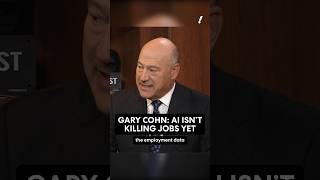
It was reported that Oracle has laid off more than 2,500 people as AI-related investments expand (thestreet.com). Paychex announces revenue increase with new AI recruiting tools (Rochester Business Journal). There are also reports on how AI will affect entry-level jobs and changes in hiring (Wisconsin Law Journal), and in Texas, the Legislature is considering ways to develop the workforce in the age of AI (thetexan.news). At Yahoo Finance, Gary Cohn said, ``AI hasn't taken away jobs yet.'' (Yahoo Finance)
Trends in energy/power demand
It was reported that conversion to an 800V DC system is progressing in order to meet the increasing power demand of AI data centers (Environment+Energy Leader). In New Jersey, residents are rebelling against the rush to build AI data centers (New Jersey Monthly). Industry research shows that AI is being increasingly used to strengthen power grids (the Electrical Distributor magazine), and Bloomberg reported that waste heat from AI data centers is becoming a new challenge for cities (Bloomberg). Nvidia executives have argued that AI can contribute to climate action despite current emissions increases (The New York Times).
Remarks by central banks, international organizations, and VIPs
- IMF (Managing Director Kristalina Georgieva's institution) warns that a debt-driven AI investment boom risks triggering selling pressure on the stock market, highlighting the opportunities and risks AI poses for economic policy (Yahoo Finance) (Finimize) (Gulf News). There are no quotes in the headline that are direct statements from the person himself. - OECD (the organization to which Secretary General Mathias Cormann belongs): Revised the global growth outlook for 2026 upward to 2.9%, led by AI, and analyzed that AI investment will alleviate energy price shocks. Also expressed caution over energy constraints in 2027 (NDTV Profit) (XTB.com) (Inspenet). There are no direct quotes from the person in the headline. - FRB Director Barr: Citing expansion of AI capital investment, tariffs, and geopolitical risks, pointed out rising inflation risk and the need for further policy adjustments (Stocktwits). - No mention of Christine Lagarde, Kazuo Ueda, Andrew Bailey, Ajay Banga, Daron Acemoglu, or Erik Brynjolfsson can be found in the list headings. Regarding Japan, the Bank of Japan's cautious policy stance was mentioned in the context of a report saying ``Japanese stocks are set to rise after the holidays,'' but Governor Ueda himself did not mention it (TBS NEWS DIG).
Trends in corporate capital investment
Alphabet raised $85 billion in funding and was cited as an example of a major tech company using debt to expand AI capital spending (Martin Cid Magazine). Wells Fargo's Ohsung Kwon said there are growing concerns about the AI capital investment cycle (CNBC). Citi is said to be strengthening its investment stance due to the acceleration of Alibaba's AI strategy (TradingView), and Meta's price target was raised to $900 due to AI momentum and revenue growth prospects (24/7 Wall St.). AI semiconductor related ETF “CHIP” has also been newly listed (Business Wire).
Trade and industrial policy
The Trump-Xi summit is scheduled to be held in Washington, and AI security will be one of the main topics on the agenda (NBC26) (Fox News). Jefferies said tariff relief in AI chips and rare earths is unlikely, but said lower tariffs could be the "most achievable outcome" of the talks (TradingView). There are also reports that support for introducing AI into school education and concerns about screen time are at odds within the Trump administration (Chalkbeat). Regarding Japan, there is an argument that the Japan-U.S. summit meeting provided a framework for technological competition with China and economic security through AI and semiconductor cooperation (Yahoo! News).
Integrated analysis: What is happening now
The OECD's upward revision to its growth outlook and the IMF's debt risk warning show that while AI investment is a short-term growth booster, it also carries financial vulnerabilities (NDTV Profit) (Yahoo Finance). That money is primarily going to large tech companies raising debt (like Alphabet's $85 billion raise) and increasing capital spending, and some investors, like Wells Fargo, are starting to worry about the AI capital spending cycle overheating (Martin Cid Magazine) (CNBC). This expansion in capital investment is facing physical constraints due to the rapidly increasing demand for electricity, and it has been reported that technological measures such as exhaust heat from data centers, strengthening of the power grid, and conversion to 800V, as well as opposition from residents, are being faced in parallel (Bloomberg) (New Jersey Monthly). In the labor market, while some companies are increasing investment and reducing employment at the same time, such as Oracle's layoffs, demand for new recruitment tools such as Paychex is also emerging, and the impact of AI on employment appears to be asymmetrical depending on industry and company. On the trade front, the Trump-Xi talks have linked AI security with semiconductor and tariff policies, and economic policy surrounding AI appears to be becoming an issue that integrates finance, industry, and security.
Future points of interest
- Will the Trump-Xi summit result in a concrete agreement on AI, semiconductors, and tariffs? - Whether the debt-dependent AI investment warned by the IMF will lead to a stock market correction, whether there will be a follow-up report. - Consequences of power grid investment and local residents' opposition to increasing power demand from AI data centers.
- AI Factories Could Contribute 5.2% to Mexico’s GDP: MEXDC — Mexico Business News09/23 19:30 UTC
- Watch Morgan Stanley’s Jonas: Physical AI Could Multiply Global GDP — Bloomberg09/23 19:22 UTC
- Fed’s Barr Sees Further Policy Adjustments As Inflation Risks Rise — Flags AI Buildout, Tariffs And Geopolitical Shocks — Stocktwits09/23 15:07 UTC
- Rep. Khanna on the state of the economy, reducing the deficit and push for U.S.-China AI deal — CNBC09/23 12:06 UTC
- Europe Joined the AI Race: The Real Gap Is Scale — economy.ac09/23 20:00 UTC
- AI and the Productivity Trap: A Finance Perspective — nippon.com09/23 21:00 UTC
- The AI Productivity Delusion — Countercurrents09/23 10:45 UTC
- The AI Triad Releases Business Before AI, a Guide to Turning AI Productivity Into Business Results — Yahoo Finance Australia09/23 18:41 UTC
- IMF says AI could transform economic policy, posing new opportunities and risks for workers, countries, and businesses — Gulf News09/23 19:22 UTC
- AI Initiative Prepares Students for a Changing Workforce — Cedarville University09/23 17:49 UTC
- State Lawmakers Examine Preparing Texas Workforce for AI Use — thetexan.news09/23 17:33 UTC
- Oracle layoffs top 2,500 workers as AI spending surges — thestreet.com09/23 19:07 UTC
- Paychex posts revenue gains, introduces new AI hiring tool — Rochester Business Journal09/23 16:14 UTC
- How AI is reshaping entry-level jobs and hiring — Wisconsin Law Journal09/23 16:58 UTC
- Why 800V DC Is Reshaping AI Data Center Power — Environment+Energy Leader09/23 20:00 UTC
- Nvidia Executive Argues A.I. Can Help Climate, Despite Current Emissions — The New York Times09/23 20:00 UTC
- AI Data Centers Release Heat, Posing New Problem for Cities — Bloomberg09/23 10:00 UTC
- Trump’s support for AI in schools could be undercut by his own administration’s screen-time fears — Chalkbeat09/23 11:48 UTC
- Tariff Cuts Are The ‘Single Most Possible Deliverable’ From Trump-Xi Talks, Says Jefferies: AI Chips, Rare Earths Relief Unlikely — TradingView09/23 11:50 UTC
- IMF Warns Debt-Fueled AI Spending Could Rattle Markets — Finimize09/23 20:04 UTC
- Starting to get more concerned about AI capex cycle, says Wells Fargo's Ohsung Kwon — CNBC09/23 20:51 UTC
- Citi Doubles Down on Alibaba Stock as AI Ambitions Accelerate — TradingView09/23 19:28 UTC
- Meta Price Targets Hiked to $900 as Analyst Cite AI Momentum, Revenue Growth Paths — 24/7 Wall St.09/23 16:45 UTC
- Alphabet’s $85 billion raise signals a debt-funded era for Big Tech’s AI buildout — Martin Cid Magazine09/23 15:39 UTC
- REX Shares Launches REX AI Chipmaking ETF (CHIP) — Business Wire09/23 12:00 UTC
- Expands to 13 countries with EU and Spain participation...Philippines "Luzon Economic Corridor" becomes hub for AI and economic security — ゴールドオンライン09/23 20:00 UTC
- Mistral's VP of Engineering: AI productivity isn't just about models — BigGo ファイナンス09/23 19:08 UTC
- World Economic Outlook Supported by AI Demand OECD Revises Growth Rate Upward to 2.9% This Year — khb東日本放送09/23 11:59 UTC
- AI and semiconductor cooperation demonstrated by the Japan-U.S. summit meeting - technological infrastructure supporting technological competition with China and economic security between Japan and the U.S. #Expert Topic — Yahoo!ニュース09/23 16:31 UTC
- Japanese stocks rise after the holidays, tailwinds from high AI stocks and weak yen - Bonds are wary of Bank of Japan policy — TBS NEWS DIG09/23 13:23 UTC

👥 Watchlist
Overview
Bullish opinion on AI capital investment and concerns about electricity and financial issues are erupting at the same time. While the OECD pointed out the severity of the ``AI investment versus energy shock'' in 2027, the US-China summit focused on AI export controls (OECD, Roll Call).
Macroeconomic/growth trends
While AI capital investment has been described as the "biggest economic bet in U.S. history" (wsj.com), it has been pointed out that the AI boom will support the situation as the situation in the Middle East weighs on global growth (The Arab Weekly). Cathie Wood mentioned the possibility of real GDP growth exceeding 7-8% due to AI, and Elon Musk reportedly agreed with this (Benzinga). There are also reports that Wall Street has fallen due to concerns about AI and inflation risks (LiveNOW from FOX).
Productivity trends
AI could help reduce government debt, but the benefits will be uneven (Reuters, Modern Diplomacy). It has been pointed out that the productivity improvement effect of AI in the scientific field is offset by the time required to verify the output (Campus Technology). Some commentators argued that AI will not destroy the job market (Barron's).
Trends in employment and labor market
Verizon announced Verizon AI Skills for America, a $70 million investment in AI training (Northwest Arkansas Democrat-Gazette, Verizon). Pearson warned of the emergence of a "triple capability gap" in which the pace of AI adoption outpaces education and training (Morningstar). As the coding boom wanes, there are reports that computer science majors are shifting their focus to acquiring AI skills (Newsday).
Trends in energy/power demand
The US Energy Information Administration (EIA) predicts that electricity usage in the US will reach a new record high in 2026 and 2027 due to increased demand for AI (EnergyNow.com). There are calls for a moratorium on plans to convert the Seneca Lake thermal power plant in Yates County, New York, into an AI data center (WHEC.com). In Ohio, residents are increasingly dissatisfied with data centers, and an AI advocacy group is reportedly trying to change that (The Columbus Dispatch).
Remarks by central banks, international organizations, and VIPs
The OECD (an organization led by Secretary General Mathias Cormann) says that AI poses both growth and risks to the global economy, and predicted that 2027 will be a tough year with a tug-of-war between AI investment and energy shocks (middle-east-online.com, myRepublica). The IMF's 2026 report identified rising debt, the AI boom, and changes in trade structure as global risks, including for Nigeria (LEADERSHIP Newspapers). The Bank of Japan (Governor Kazuo Ueda) raised its economic outlook for the Tohoku region for the first time in 21 months, citing growth in semiconductor manufacturing equipment driven by demand for AI as a factor (Nihon Keizai Shimbun).
Trends in corporate capital investment
Estimates suggest that U.S. investment in AI infrastructure could reach $10.3 trillion over the next eight years, making it the biggest bet in history, surpassing the era of railroads (finance.biggo.com). Tesla is said to be planning a capital investment of over $25B in 2026 while proceeding with the installation of Grok as AI (TradingView). Gene Munster believes that Google and AWS's cloud business has exceeded market expectations, and that AI capital investment growth will accelerate toward 2027 (Stocktwits).
Trade and industrial policy
AI export controls were a major issue at the Trump-Xi Jinping meeting, and the Taiwan issue and oversupply of EVs were also discussed (Roll Call, Mercator Institute for China Studies). It was reported that China sent a message to Mr. Trump that ``it cannot be tightened'' through its mass production offensive of AI chips (CNBC). The US Democratic Party has called on President Trump to reach an agreement with Xi Jinping to slow down AI development (KEYE). Some analysis suggests that the two leaders are seeking "safe AI" without slowing down the competition for supremacy (The Japan Times).
Integrated analysis: What is happening now
The scale of capital investment (estimated at $10.3 trillion, Tesla's over $25B) and the rapid increase in electricity demand (EIA's record-breaking forecast, Seneca Lake conversion plan) are two sides of the same coin, and the tug-of-war in 2027 of "AI investment versus energy shock" pointed out by the OECD is exactly this friction between capital investment and electricity infrastructure. At the same time, on the employment front, as evidenced by Verizon's large-scale training investment and Pearson's "capability gap" warning, there appears to be a structural gap in which human resource development is not keeping up with the speed of AI adoption. On the trade front, while the United States and China are restraining each other over AI export restrictions, there are also cases where the AI boom is spreading to the real economy through semiconductor demand, such as the Bank of Japan's upgrade of its economic outlook for the Tohoku region, and the benefits and distortions of the AI boom are becoming apparent at the macro, productivity, electricity, and policy levels in parallel.
Future points of interest
- How will the ``tug of war between AI investment and energy shocks'' in 2027, which the OECD warns about, affect actual power prices and power grid strains? - The future of negotiations between the US and China regarding AI export restrictions and the impact on the semiconductor supply chain - Impact of the expansion of the “triple capability gap” in the job market on wage and recruitment trends
- COMMENTARY: AI could help governments cut debt — but unevenly — Reuters09/24 07:07 UTC
- SPCX CEO Elon Musk Backs Cathie Wood’s Bullish AI Call: Real GDP Growth Could Blow Past 7%-8% — Benzinga09/24 08:22 UTC
- The AI Build-Out Is Becoming the Biggest Economic Bet in U.S. History — wsj.com09/24 01:00 UTC
- Wall Street drops amid AI concerns, inflation risk — LiveNOW from FOX09/24 02:27 UTC
- AI's Productivity Gains in Science Tempered by Time Spent Validating Outputs — Campus Technology09/23 22:34 UTC
- Two different approaches to AI converge in one focus: people — Commercial Carrier Journal09/24 01:51 UTC
- Why AI Won’t Destroy the Job Market — Barron's09/24 05:00 UTC
- Hong Kong must grapple with water implications of AI race — South China Morning Post09/24 03:30 UTC
- Verizon pledges $70M in AI training — Northwest Arkansas Democrat-Gazette09/24 06:44 UTC
- Steidler: How AI can actually be good for workers — Boston Herald09/24 07:27 UTC
- Pearson research warns of a 'triple capability gap' emerging as AI adoption outpaces education and training in skilled occupations — Morningstar09/24 07:00 UTC
- As the coding boom fades, computer science grads focus on AI skills in choppy job market — Newsday09/24 07:17 UTC
- Verizon announces $70m investment in nationwide AI upskilling initiative with “Verizon AI Skills for America” — Verizon09/24 02:10 UTC
- Seneca Lake power plant in Yates County converting to AI data center, sparks calls for moratorium — WHEC.com09/24 07:11 UTC
- How Comb Lasers Could Reshape AI Data Center Links — Data Center Knowledge09/24 09:00 UTC
- US Power Use to Beat Record Highs in 2026 and 2027 as AI Use Surges, EIA Says — EnergyNow.com09/24 04:49 UTC
- Ohioans are fed up with data centers. Pro-AI groups want to change that — The Columbus Dispatch09/24 07:43 UTC
- AI at the Trump-Xi summit + Taiwan + EV overcapacities — Mercator Institute for China Studies09/24 08:15 UTC
- China's AI chip blitz arms Xi with a message for Trump: 'You can't choke us off' — CNBC09/24 03:38 UTC
- Democrats call on Trump to establish agreement with Xi Jinping to slow AI development — KEYE09/23 21:15 UTC
- AI brings both growth, risk to global economy: OECD — myRepublica09/24 03:05 UTC
- Japan’s Nikkei rises as AI catch-up rally offsets yield worries — TradingView09/24 02:02 UTC
- IMF 2026 Report Flags Rising Debt, AI Boom, Trade Shifts As Key Global Risks For Nigeria — LEADERSHIP Newspapers09/24 06:59 UTC
- AI is becoming part of banking operations, raising questions about authority, oversight and accountability — TechTrendsKE09/24 07:08 UTC
- Gene Munster Expects Google, AWS Cloud To Beat Q2 Estimates — Sees Higher AI Capex Growth in 2027 — Stocktwits09/24 07:03 UTC
- Key facts: Tesla (TSLA) >$25B 2026 capex; Fitch BBB; Grok AI in cars — TradingView09/24 07:15 UTC
- AI Infrastructure Spending Sets Unmatched US Economic Boom — The Cryptonomist09/24 08:12 UTC
- Is AI Spending Too Big—or Is Earth's Economy Just Too Small? Elon Musk Picks a Side — BeInCrypto09/24 07:41 UTC
- US AI Infrastructure Investment Could Hit $10.3 Trillion Over Eight Years, Surpassing Railroad Era as the Biggest Bet in History — finance.biggo.com09/24 06:25 UTC
- Bank of Japan raises Tohoku economic outlook for the first time in 21 months Semiconductor manufacturing equipment grows due to AI demand — 日本経済新聞09/24 08:45 UTC
- The second episode of Season 3 of the English podcast program “The Future of the Japanese Economy: Aging, AI, and Automation (Faculty of Political Science and Economics, Professor Akihiko Kaneko)” is now available. — waseda.jp09/24 05:47 UTC
- Trump's claims about AI do not resonate with the public - concerns about jobs and data centers — Bloomberg.com09/24 03:11 UTC
- A ``machine-native economy'' where AI and virtual currency merge, computing resources will also become financial - BlackRock analysis — CoinPost09/24 05:30 UTC
- A small voice-controlled AI terminal announced by Meta — 盛岡経済新聞09/24 08:48 UTC