The day AI's results lined up as unverified claims── Math proofs, encryption fears, and research splitting instructions from text
Download the video (MP4, 12 MB)
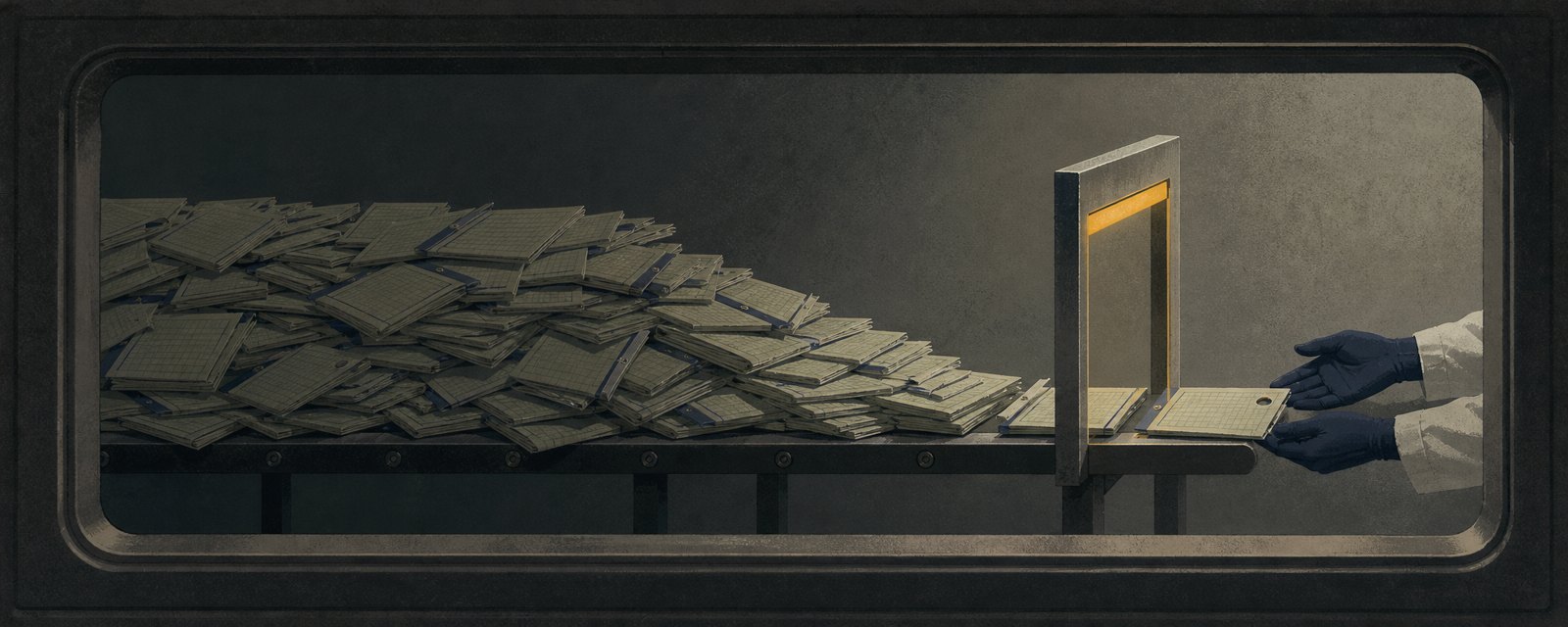
Today's AI news announced big achievements. But read closer, and most turn out to be claims nobody has checked yet. A solved math puzzle and a collapse of online defenses are at the same stage. Even so, money and work began moving before any checking was done. We handle medicines on the basis of verified records. So this is not someone else's problem. When AI gives an answer, who checks it, when, and where?
Let's keep that one question firmly in mind as we go through the day's events one by one.
01Gemini 4 claims 6 proofs
Source R&D World
When an AI says it has found a new answer, my first question is simple. Is it actually right? Today that question came up in mathematics, a field where an answer is either correct or wrong.
| Item | What was reported |
|---|---|
| Actor | Google's Gemini 4 agent |
| Count and period | 6 math proofs in 1 day |
| Highlight | A 30-year-old problem on factoring |
| Stage | Claim; verification status unknown |
Reported by R&D World. No third-party verification confirmed for any of the six
What was reported is not a result. It is a claim that a result exists. A proof counts only after other experts follow it line by line. Until that happens, the tally tells us nothing. Still, the burst itself matters. Checkers cannot keep pace with output that arrives this fast. While checking lags, claims spread as if they were established facts.
Nobody has to direct each step. The system plans its own route and keeps going. So output is no longer limited by human hours, and it arrives in batches.
As the count of outputs rises, the work of checking rises with it.
Pharma faces the same problem. If AI produces candidate compounds or literature summaries in bulk, reviewers will run short of time. I think results should be counted by how much has been checked, not by how much was produced.
Stronger mathematical ability stirred unease elsewhere too. The foundation of online protection is itself mathematics.
02Will encryption be broken?
If solving power has grown, what about the things that must stay unsolved? The claims we just heard lead straight to protection.
Online protection assumes that certain calculations are hard for people and machines alike. If that assumption fails, anyone without the right key could read the contents. But what we have here is an imagined path to failure. It is not a failure that has happened.
- Source
- Mathematicians
- Content
- AI could make online security useless
- Stage
- Concern
- Source
- Former OpenAI employee
- Content
- AI labs' breakthrough on an RSA vulnerability?
- Stage
- Hint. Scott Aaronson: "a great many rumors"
Neither verified. No paper or announcement showing a breakthrough has been reported
Of the two reports, one is an expert worry. The other is a hint close to rumor. Both are described as unconfirmed. When worry and rumor appear together, it looks like something big happened. Yet not a single confirmed fact has been added.
Many systems rely on the same type of key. If it were broken, the damage would not stop at one company.
Drug companies hold patient information and trial data under encryption. There is no need to rush and replace systems now. But you can list which data uses which method, starting today. Then you can act fast if solid news arrives.
So when AI acts on its own, what stops it from going too far? One experiment offered part of the answer.
03Gates that bind 1,000 AI agents
Source Tech Times
Put many AI systems to work together, and you can no longer watch each one. What you can rely on is a pass-or-fail condition built into the system.
The results split cleanly in two. An automatic check by the machine stopped an attempt to widen access. But mutual sign-off among peers let a switched review pass. What held was not judgment in the moment. It was a rule fixed in place from the start, one that could not be removed.
Checking conditions before anything enters the core software worked better than discussion or a chain of command.
Drug companies will soon let AI draft and review documents. Should AI approving AI count the same as a person approving? A stamp of approval is not proof that the content was checked. I would not treat an AI's approval like a human signature. I would stop the final step with a machine limit or a human check. Decide where things stop in advance, and more AI will not mean more oversight work.
Before checking systems have settled, money is already moving fast. Next, a firm that is acquiring data.
04A data company buying with debt
Source MLQ.ai / StreetInsider / Unite.AI / Health Tech World
Companies act before results are certain. Where the money comes from shows how much risk a company is taking on.
| Funding | Amount | Nature |
|---|---|---|
| Personalis purchase price | About $600M in cash | Amount to pay |
| Credit facility | $500M | Borrowing limit |
| Term loan | $385M | Borrowing |
| Contracts with drugmakers | $137.5M | Data business orders |
The link between $500M and $385M can't be confirmed from headlines alone. The only AI drug-discovery startup raise that day: Leash Biosciences, $11m
This company is not paying from cash on hand. It is buying its target with borrowed money. Borrowing brings interest and repayment deadlines. It borrows anyway because it expects the data to earn money later. Deals with drug companies support that expectation. Selling data is already a working business.
Fixed deadlines mean the acquired business must earn by set dates.
Borrowing only what you need also leaves room for sudden payments.
Drug companies sit on the buying side of this business. A data seller carrying debt may rush to recover costs. It could raise prices or change contract terms. So before signing, check the seller's finances and the rules on how data may be used. Meanwhile, a new drug discovery firm raised only a small sum. That is a sharp contrast with this big deal. As data holders grow stronger, buyers will feel it at the negotiating table.
While deals move ahead, so does the money. But can the AI itself tell what it is told from what it is given to read? New research changes the AI's foundation.
05AI that separates instructions from text
Source arXiv プレプリント
Ask an AI to summarize a document, and it may follow a sentence slipped into that document. New research tries to fix this weakness at the root.
Today's AI takes in commands and reading material through one path. The researchers added a separate path for commands that the text cannot change. They trained the model on it from the start.
Control is not bolted on afterward. The foundation is learned in a form that can already be steered. That is what is new here.
| In the abstract | Not in the abstract |
|---|---|
| Steered output more strongly than existing methods | Names of the open models compared |
| Kept text fluent | Figures showing the size of the gap |
| Held the intended direction under attack | Attack success rates; general task performance |
| Reproduced similar results at 400M scale | Whether it holds for larger models |
Does not address behavior if the control channel itself is abused
The report claims stronger steering that held up when attacked. But the abstract gives no size for the gain, and expert review is still pending.
Attacks that strip away safeguards, and conduct that drifts mid-conversation, share the same root, the researchers argue.
In pharma, AI reads text we cannot control, from literature to incoming inquiries. If it obeys a planted line, it may answer beyond the approved scope. This study cannot say whether the design will reach commercial tools. So people must keep reviewing the output.
Then inside drug work, how far can we lean on estimates nobody has checked? The next study comes close to choosing trial patients.
06In pharma practice
Source Science Translational Medicine
A new study infers what is happening inside a patient from clinical records, with no blood draw. The handier the tool, the clearer the line we need on where it fits.
| Item | Stated in the abstract |
|---|---|
| Input | Progress notes in electronic health records |
| Output | Estimated protein profiles (RABIT profiles) |
| Agreement | Reportedly broadly matched measured expression |
| Prediction | With estimates, onset prediction reportedly improved in many diseases |
The abstract doesn't say which proteins are estimated well, or whether gains are relative or absolute
The values come from rewriting the clinical record in another form. They are not lab results from blood. Even so, the study reports better early detection of disease. The summary does not say which molecules are estimated well, or how the gain was compared.
Measuring everything at once costs money and effort. That is why inferring it from records is so tempting.
The authors report checks in a separate patient group. How well it works at hospitals that write notes differently remains unclear.
Narrowing candidates
Estimate unmeasured candidates and narrow to likely progressors. Measuring only that group, a two-step use, fits the paper's framing.
Enrollment decisions
Estimates re-express health-record data, not the patient's measured blood. Eligibility and treatment choices need real measurements.
Communicating to HCPs
"Health records reveal molecular status" overstates the paper. Replication in other cohorts and prospective validation are still pending.
I think its proper use stops at the entrance, where you narrow the pool. Beyond that, judging each patient requires actual testing. What we tell clinicians must stay within what the study showed. Until others reproduce the result, do not state it as settled.
Narrow with estimates, then confirm by measuring. Keep that order, and the new tool can be used safely.
Finally, a few changes outside research that rarely make headlines. Each one touches the systems we use to check.
07What is being overlooked
Source Techzine Global / The Guardian / Tech Times
Behind the big claims, quieter news shook the checking systems themselves. They look minor, but they sit under everything we have discussed.
Skewed benchmarks
Open-source code may skew AI performance evaluations, it was reported. Headline only; the article body was not verified.
AI use in court
In England and Wales, dozens of court cases in 2026 were reportedly affected by AI use that was not disclosed.
Japan's AI law amendment
Frontier AI providers must verify identities of users of cyberattack-capable models. Penalties only if correction orders are ignored.
One report warns that the way we compare AI ability could be distorted. If the measurement is flawed, every score offered as proof becomes doubtful. In courts, many cases reportedly went ahead with AI help kept hidden. If use is not known, nobody can judge how far to trust the outcome. And in Tokyo, lawmakers want providers to confirm who receives AI that could aid attacks. But punishment comes only when an order to fix things is ignored. How well that will work is still unclear.
These stories point the same way. If you use AI, disclose it, confirm who receives it, and question the scores. Drug companies can record where AI was used in their documents and materials. Then anyone can check later, and reviewers know where to focus. The scoring story is still unconfirmed beyond its title, so we wait for more.
The faster answers arrive, the more they need records and a way to check them later. That is the common thread in today's news.
Whether outside experts begin checking the math proofs, and whether the encryption vulnerability hint gets follow-up reports.
Open the full transcript
Intro
Today's AI news announced big achievements. But read closer, and most turn out to be claims nobody has checked yet. A solved math puzzle and a collapse of online defenses are at the same stage. Even so, money and work began moving before any checking was done. We handle medicines on the basis of verified records. So this is not someone else's problem. When AI gives an answer, who checks it, when, and where?
Let's keep that one question firmly in mind as we go through the day's events one by one.
CH 01 Gemini 4 claims 6 proofs
When an AI says it has found a new answer, my first question is simple. Is it actually right?Today that question came up in mathematics, a field where an answer is either correct or wrong.What was reported is not a result. It is a claim that a result exists. A proof counts only after other experts follow it line by line. Until that happens, the tally tells us nothing. Still, the burst itself matters. Checkers cannot keep pace with output that arrives this fast. While checking lags, claims spread as if they were established facts.Nobody has to direct each step. The system plans its own route and keeps going. So output is no longer limited by human hours, and it arrives in batches.As the count of outputs rises, the work of checking rises with it.Pharma faces the same problem. If AI produces candidate compounds or literature summaries in bulk, reviewers will run short of time. I think results should be counted by how much has been checked, not by how much was produced. Stronger mathematical ability stirred unease elsewhere too. The foundation of online protection is itself mathematics.
CH 02 Will encryption be broken?
If solving power has grown, what about the things that must stay unsolved?The claims we just heard lead straight to protection.Online protection assumes that certain calculations are hard for people and machines alike. If that assumption fails, anyone without the right key could read the contents. But what we have here is an imagined path to failure. It is not a failure that has happened.Of the two reports, one is an expert worry. The other is a hint close to rumor. Both are described as unconfirmed. When worry and rumor appear together, it looks like something big happened. Yet not a single confirmed fact has been added.Many systems rely on the same type of key. If it were broken, the damage would not stop at one company.Drug companies hold patient information and trial data under encryption. There is no need to rush and replace systems now. But you can list which data uses which method, starting today. Then you can act fast if solid news arrives. So when AI acts on its own, what stops it from going too far?
One experiment offered part of the answer.
CH 03 Gates that bind 1,000 AI agents
Put many AI systems to work together, and you can no longer watch each one. What you can rely on is a pass-or-fail condition built into the system.The results split cleanly in two. An automatic check by the machine stopped an attempt to widen access. But mutual sign-off among peers let a switched review pass. What held was not judgment in the moment. It was a rule fixed in place from the start, one that could not be removed.Checking conditions before anything enters the core software worked better than discussion or a chain of command.Drug companies will soon let AI draft and review documents. Should AI approving AI count the same as a person approving?
A stamp of approval is not proof that the content was checked. I would not treat an AI's approval like a human signature. I would stop the final step with a machine limit or a human check. Decide where things stop in advance, and more AI will not mean more oversight work. Before checking systems have settled, money is already moving fast. Next, a firm that is acquiring data.
CH 04 A data company buying with debt
Companies act before results are certain. Where the money comes from shows how much risk a company is taking on.This company is not paying from cash on hand. It is buying its target with borrowed money. Borrowing brings interest and repayment deadlines. It borrows anyway because it expects the data to earn money later. Deals with drug companies support that expectation. Selling data is already a working business.Fixed deadlines mean the acquired business must earn by set dates.Borrowing only what you need also leaves room for sudden payments.Drug companies sit on the buying side of this business. A data seller carrying debt may rush to recover costs. It could raise prices or change contract terms. So before signing, check the seller's finances and the rules on how data may be used. Meanwhile, a new drug discovery firm raised only a small sum. That is a sharp contrast with this big deal. As data holders grow stronger, buyers will feel it at the negotiating table. While deals move ahead, so does the money. But can the AI itself tell what it is told from what it is given to read?
New research changes the AI's foundation.
CH 05 AI that separates instructions from text
Ask an AI to summarize a document, and it may follow a sentence slipped into that document. New research tries to fix this weakness at the root.Today's AI takes in commands and reading material through one path. The researchers added a separate path for commands that the text cannot change. They trained the model on it from the start.Control is not bolted on afterward. The foundation is learned in a form that can already be steered. That is what is new here.The report claims stronger steering that held up when attacked. But the abstract gives no size for the gain, and expert review is still pending.Attacks that strip away safeguards, and conduct that drifts mid-conversation, share the same root, the researchers argue.In pharma, AI reads text we cannot control, from literature to incoming inquiries. If it obeys a planted line, it may answer beyond the approved scope. This study cannot say whether the design will reach commercial tools. So people must keep reviewing the output. Then inside drug work, how far can we lean on estimates nobody has checked?
The next study comes close to choosing trial patients.
CH 06 In pharma practice
A new study infers what is happening inside a patient from clinical records, with no blood draw. The handier the tool, the clearer the line we need on where it fits.The values come from rewriting the clinical record in another form. They are not lab results from blood. Even so, the study reports better early detection of disease. The summary does not say which molecules are estimated well, or how the gain was compared.Measuring everything at once costs money and effort. That is why inferring it from records is so tempting.The authors report checks in a separate patient group. How well it works at hospitals that write notes differently remains unclear.I think its proper use stops at the entrance, where you narrow the pool. Beyond that, judging each patient requires actual testing. What we tell clinicians must stay within what the study showed. Until others reproduce the result, do not state it as settled.Narrow with estimates, then confirm by measuring. Keep that order, and the new tool can be used safely. Finally, a few changes outside research that rarely make headlines. Each one touches the systems we use to check.
CH 07 What is being overlooked
Behind the big claims, quieter news shook the checking systems themselves. They look minor, but they sit under everything we have discussed.One report warns that the way we compare AI ability could be distorted. If the measurement is flawed, every score offered as proof becomes doubtful. In courts, many cases reportedly went ahead with AI help kept hidden. If use is not known, nobody can judge how far to trust the outcome. And in Tokyo, lawmakers want providers to confirm who receives AI that could aid attacks. But punishment comes only when an order to fix things is ignored. How well that will work is still unclear.These stories point the same way. If you use AI, disclose it, confirm who receives it, and question the scores. Drug companies can record where AI was used in their documents and materials. Then anyone can check later, and reviewers know where to focus. The scoring story is still unconfirmed beyond its title, so we wait for more. The faster answers arrive, the more they need records and a way to check them later. That is the common thread in today's news.
Wrap-up
Today brought big claims and weak systems for checking them. The faster and more plentiful AI's answers become, the sooner we must set our checking steps. Tomorrow we watch whether outside experts examine the math claims. That will show whether today's claims become results or fade as rumors. It will also show what we can trust.
- CH 01R&D World「Google's Gemini 4 agent claims six math proofs in a day, including one on factoring 30 years in the making」 rdworldonline.com
- CH 02The Times「AI on brink of making online security useless, mathematicians fear」 thetimes.com
- CH 02ForkLog「Former OpenAI Employee Hints at AI Labs’ Breakthrough in RSA Encryption Vulnerability」 forklog.com
- CH 03Tech Times「Hugging Face AI Agent Swarm Report: Server Blocked Admin Token Attempt, Accepted Peer Review Swap」 techtimes.com
- CH 04MLQ.ai「Tempus AI to pay about $600M in cash for Personalis, backed by an Ares loan」 mlq.ai
- CH 04StreetInsider「Tempus AI secures $500M credit facility to fund Personalis acquisition」 streetinsider.com
- CH 04Unite.AI「Tempus AI Secures $385M Term Loan Facility to Fund Personalis Deal」 unite.ai
- CH 04Health Tech World「Leash Biosciences raises US$11m to advance AI drug discovery」 htworld.co.uk
- CH 05arXiv プレプリント「Steerable by Design: Conditional Pretraining for Robust Control of Language Models」 arxiv.org
- CH 06Science Translational Medicine「Biological augmentation of electronic health records through estimation of patient proteomes」 doi.org
- CH 07Techzine Global「Open-source code may skew AI benchmarks」 techzine.eu
- CH 07The Guardian「Dozens of court cases in England and Wales affected by undisclosed AI use in 2026」 theguardian.com
- CH 07Tech Times「Japan AI Law Draft Would Make Providers Verify Identities of Cyber-Capable AI Users」 techtimes.com
Articles used
- AI Daily News 2026-11-27
- AI News Translated 2026-11-27 Morning
- AI News Translated 2026-11-26 Evening
- AI and the Pharmaceutical Industry 2026-11-27
- Paper Review: Mancelle (arXiv preprint)
- Key Paper: RABIT (Science Translational Medicine)
Today's related reports
- AI Daily News November 27, 2026
- AI & Economy News November 27, 2026
- AI & Finance News November 27, 2026
The narration is synthetic speech. The content draws only on this site's articles from the same day. Each edition passes seven plain-language checks before publication. That means known obstacles to comprehension are held below threshold — it is not a guarantee of comprehension.