AI questions people’s roles before replacing them
It has been reported that HSBC will significantly reduce headcount in its wealth division for high-net-worth individuals in the UK and promote the use of AI. Around the same time, it was reported that Anthropic's claims and third-party test results from ClawSecure were at odds regarding the safety of AI. While replacement has entered the workforce plan, it has not yet been determined who will verify its performance and safety. What you will read in this half-day is the decision that goes beyond whether or not to include AI. Who will use AI, who will be responsible if an error occurs, and what confirmation procedures will be used? Below, we will follow the four ingredients in order: workforce reduction, image diagnosis, safety assessment, human resources and education, and see how decisions shift from the pros and cons of introduction to the design of roles and verification.
It was reported that HSBC will make large-scale job cuts in its wealth division for high-net-worth individuals in the UK and move forward with the use of AI (Financial Times, Reuters). What we can confirm from the materials is that reduction and AI promotion are being talked about in the same context. The scale of the reductions and the breakdown of job types are not covered here. This incident shows that AI has entered the stage of replacing human work in finance. It can be said that discussions about its introduction have now moved to the stage where it will have a direct impact on personnel planning, after the demonstration tests have been completed.
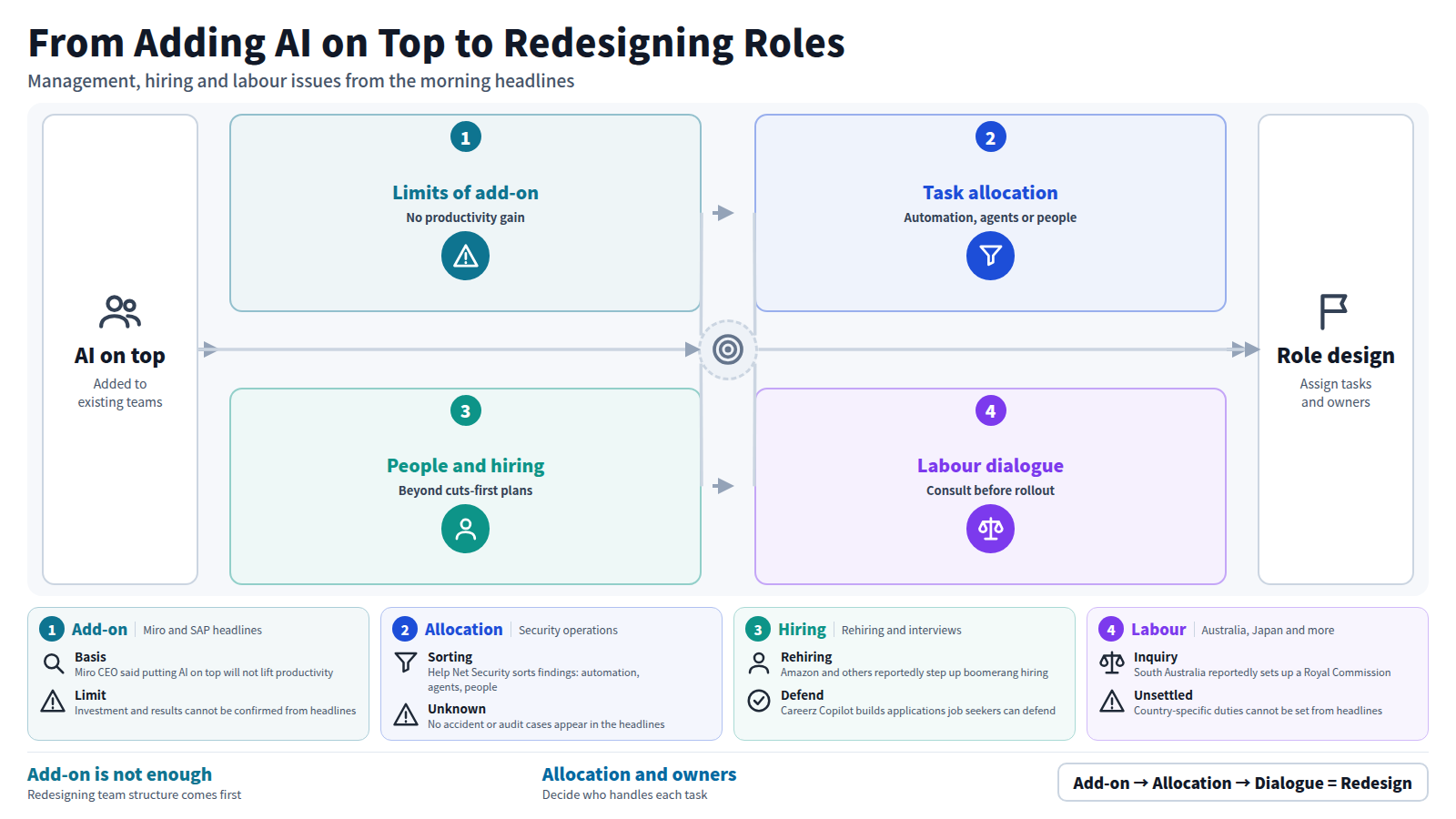
However, the fact that replacement has begun does not alone determine what readers should decide next. FinAi News argues that financial institutions should treat AI agents as employees, not tools. If it's a tool, you can ask who uses it, but not who is responsible for it. If you treat them as employees, you will need to decide the scope of work they will be responsible for, how they will report to their superiors, how to confirm results, and who will be held responsible in the event of a mistake. This proposal raises a different question than the pros and cons of reductions. Rather than thinking about how many people to reduce, we are calling for a design that first considers what role AI will have and who will supervise it.
The same idea can be seen outside of finance. South Korea's Myongji Hospital is partnering with Lavoro AI to test robots for non-clinical hospital tasks (Korea Biomedical Review). It is important that the scope is limited to non-clinical work. Instead of delving into the heavy responsibility of medical treatment, he limits the scope of his work to peripheral tasks. This is not a story about reducing the number of people, but a story about testing how to divide work between people and robots. The HSBC case shows the aspect of ``replacement,'' and this test shows the aspect of ``division of roles.''