Speed of introduction and delays in verification and governance
From the prospect of Anthropic going public to the use of AI in the medical field, this half-day of articles has a common sequence. AI is infiltrating finance, employment, health care, and education before verification and governance mechanisms are in place. For example, medical AI is already being used in hospitals, but it has been pointed out that most of it has not undergone sufficient verification. On the other hand, there are also cases where agents are responsible for the "invisible 80%" of procurement operations, and evaluations that see AI as a "once-in-a-generation opportunity." The numbers and expectations shown as results are specific. However, what determines readers' judgment is not so much its size, but rather who checks it and who decides how to use it. In each of the following sections, we will focus on this point as we read the article.
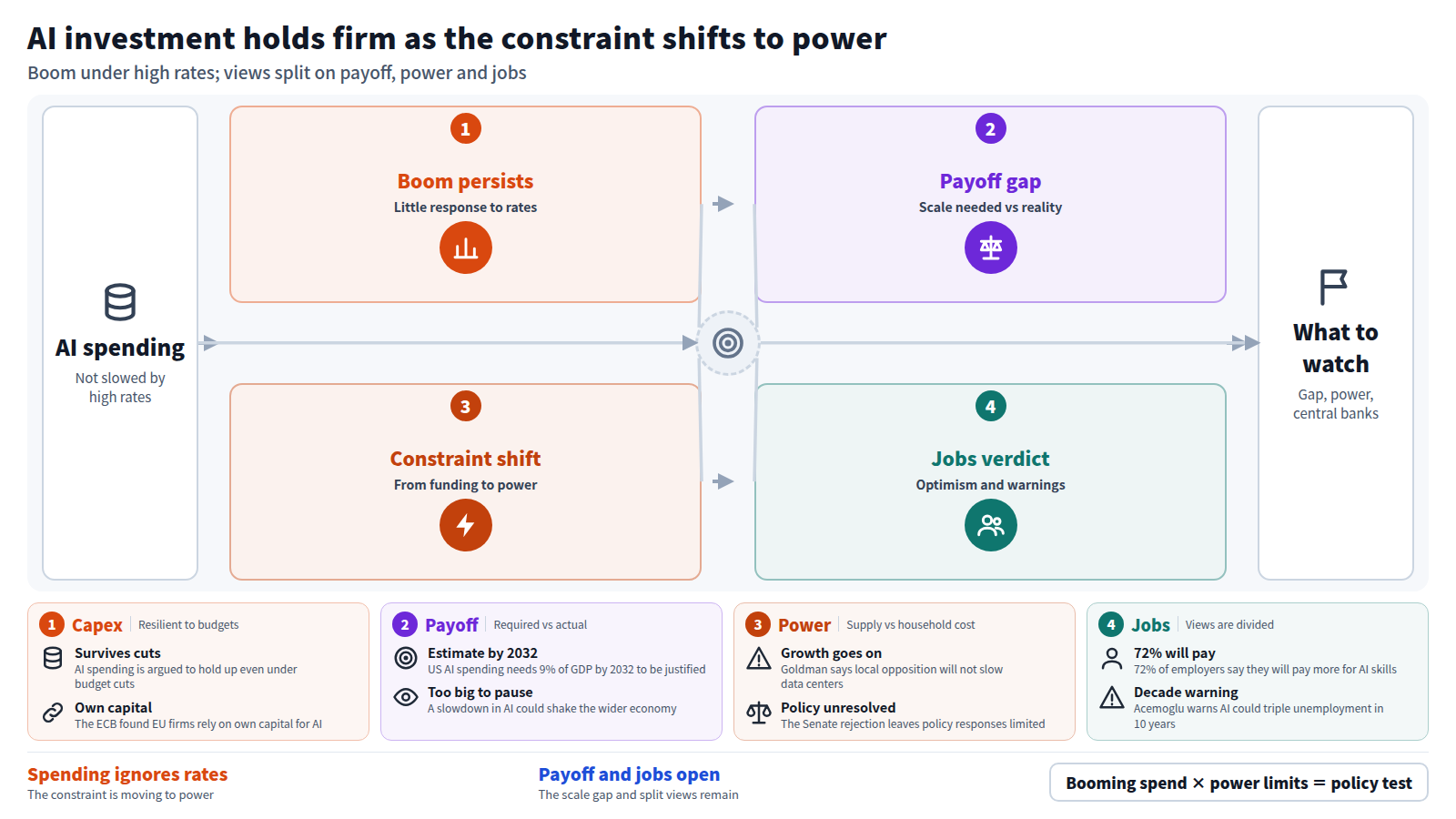
Anthropic is expected to go public despite market uncertainty and speculation that AI will slow down, CNN reported. Around the same time, the Australian Bankers Association labeled AI a "once-in-a-generation opportunity," Law360 reports. Both those who collect funds and financial industry organizations have expressed positive views. However, what these two things indicate are the expectations of the parties involved. Even if the company goes public, it does not mean that the AI business will become profitable. It is not clear from the headline of the article who tested the evaluation as an "opportunity" and under what conditions. What readers should take is the fact that expectations are strong, not the conclusion that growth is certain.
On the other hand, there are doubts about the sustainability of growth. Vanguard's Wang pointed out that inflation will remain high due to energy and AI (Bloomberg.com). The Bank of England has flagged the threat that slowing AI growth poses to national debt (WSJ). Although these two concerns appear to be in opposite directions, the premise is the same: whether or not AI continues to grow will affect the outlook for prices and government debt. Juxtaposed with the observation that Anthropic went public, two views emerged at the same time: if growth continues, it will put pressure on prices, and if it stops, it will spread to government bonds. In both cases, both parties believe the impact will extend beyond the AI companies to households and governments.
Another point is directed to the substance of growth. Futurism reported that the AI industry is producing products that undermine the economic incentives for creating cultural content, creating a "vicious cycle." The idea is that if the motivation for creation weakens, the material that AI learns from and the source of value it uses will also diminish. Again, what is being debated here is not the size of demand, but whether the conditions that support growth will be maintained. Comparing the points made by CNN, which reports on Anthropic's listing, and Law360, which reports on the Australian Bankers Association's evaluation, with Vanguard (Bloomberg.com), Bank of England (WSJ), and Futurism, expectations are expressed from the business side, while doubts are expressed from the perspective of prices, government bonds, and the field of creation. If you look at it from a different place, your judgment about the same growth will change. Whether growth continues depends on whether people outside of growth are able to shoulder the burden, and the next question is who will estimate and decide on that burden.