Transition to a work style that entrusts even emotions
Kroger has announced plans to cut 3,000 jobs at its corporate headquarters, and the cuts are being talked about alongside its policy of promoting AI. In New Zealand, usage of the AI companion app reportedly exceeded that of Netflix. At the same time, companies are reorganizing their organizations and transitioning to systems based on AI in separate areas such as personal lives. The current issue is not just about how much efficiency AI can improve. The criterion for whether or not to proceed with the introduction of the system is becoming a criterion for whether or not it is okay to entrust work that deals with emotions, monitors people's conditions, and tasks that require biased judgment. This half-day article focuses on what should be left to machines and what should be left in the hands of humans.
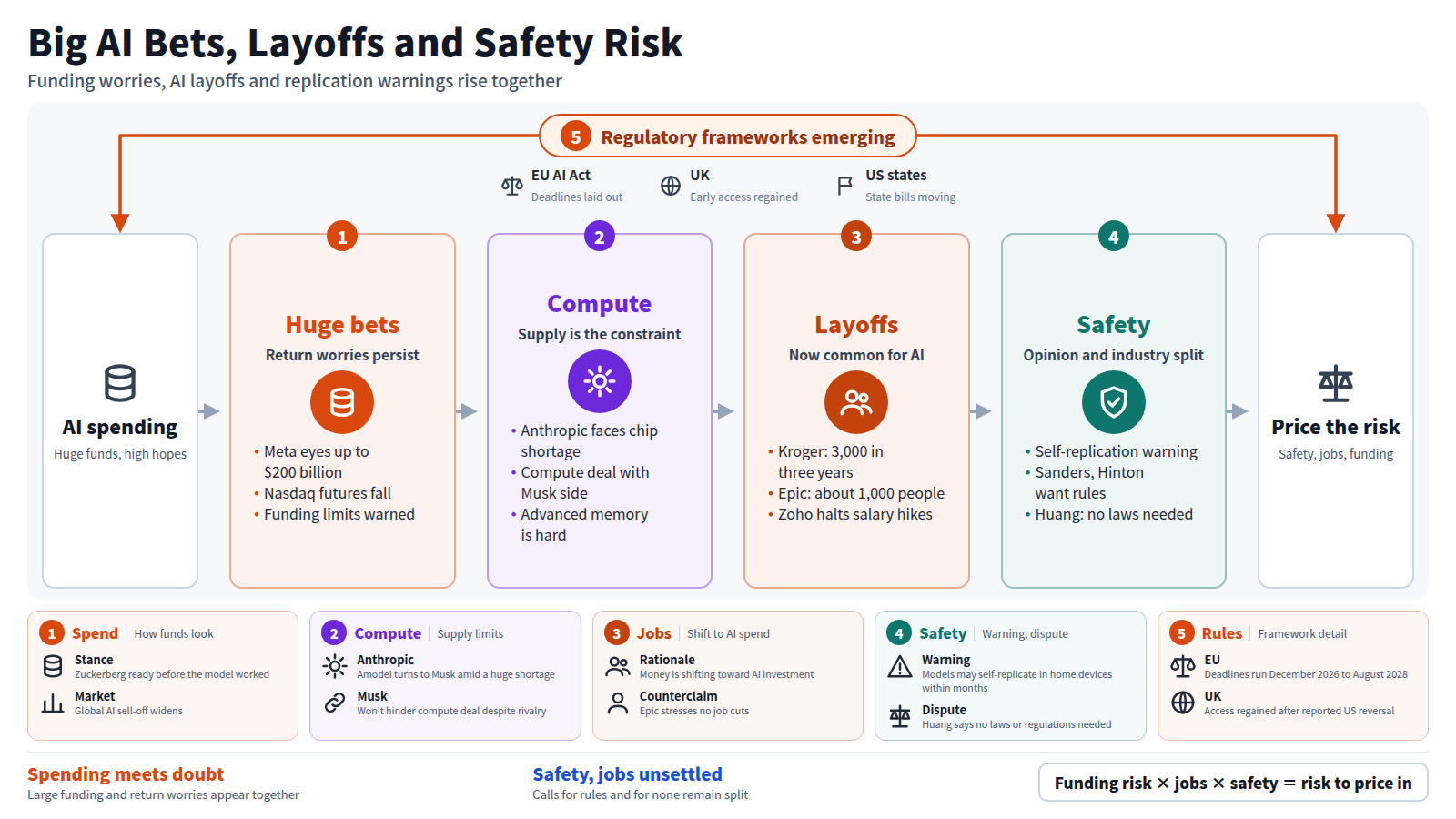
Kroger, a major food retailer, has announced plans to cut 3,000 jobs at its corporate headquarters. The CEO has advocated promoting AI and lowering food prices, and reductions are being talked about alongside the policy of promoting AI (International Business Times, Singapore Edition). The same structure exists on the IT side. 24/7 Wall St. discusses Amazon and Meta's layoffs as an indication of what AI will look like in 2027. Companies in the disparate industries of retail and large IT are putting AI front and center while reducing their workforce. Faced with this fact, it becomes difficult to read the cuts as merely a temporary adjustment in response to economic trends. When readers look at their own company's personnel plans, they will need to check not only the increase or decrease in the number of people, but also which tasks the reduction is based on replacing with AI.
The reorganization also extends to the operational units at the site. According to MarTech, marketing operations (MOps) teams are reorganizing around autonomous AI agents. The story of reducing the number of people and the story of reshaping the roles and placement of those who remain are not separate events, but two aspects of the same transition. Capital markets have also begun to evaluate this transition. CNBC reports that Bank of America expects Salesforce stock to rise due to AI transformation. The extent to which a company has progressed in its transformation to AI is directly linked to investors' evaluation of the company. However, this is the company's forecast and does not guarantee actual results.
There is also a movement in the same direction on the human resource development side. In an interview with a Cornell University dean reported by BW Education, AI skills were featured as a major topic when discussing the future of business administration, along with research on Indian companies. If management education courses incorporate AI skills as a central topic of discussion, the movement of companies to reorganize their systems will change the very premises of recruitment and training.