AI investment weighs on jobs and trust
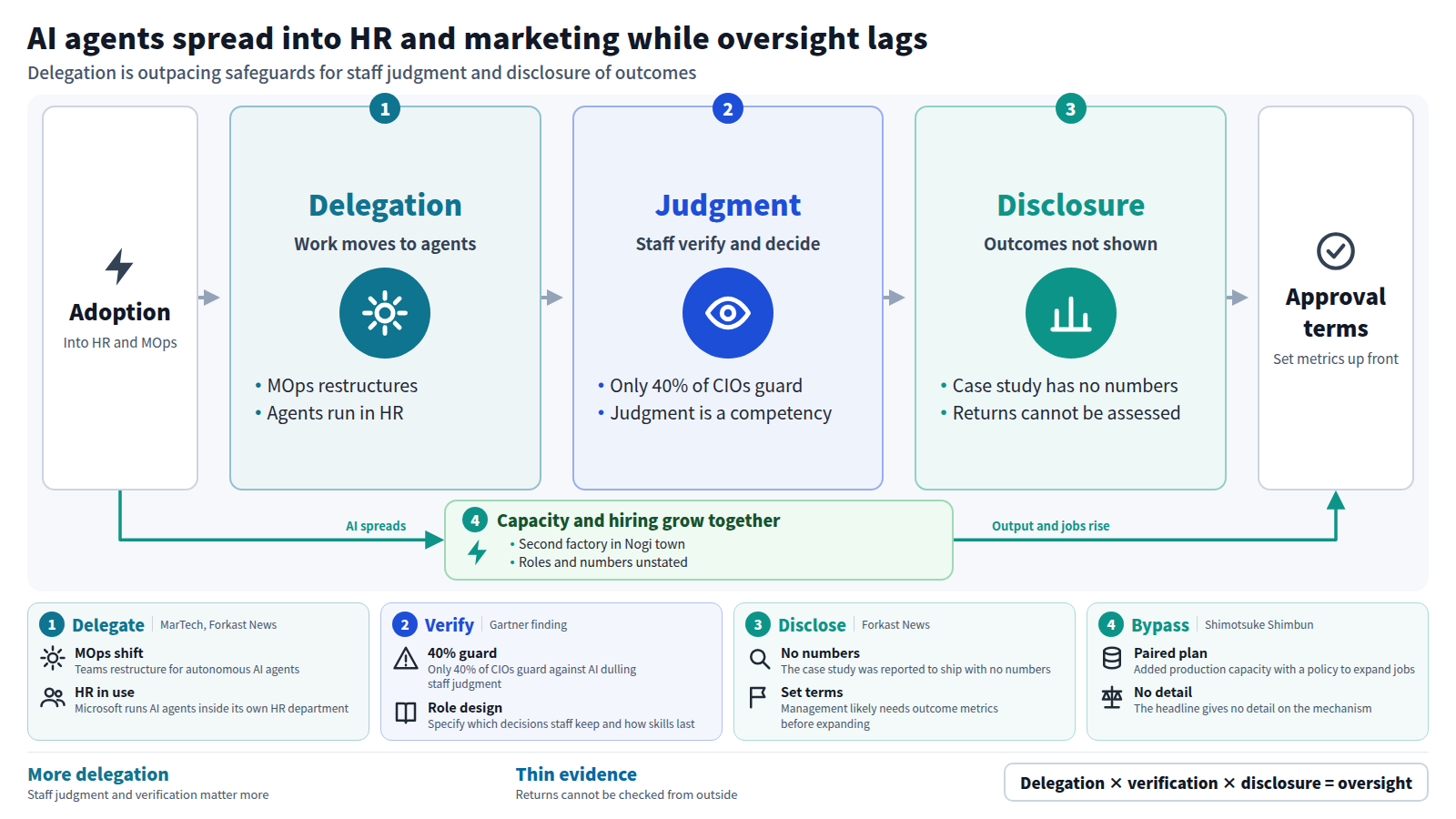
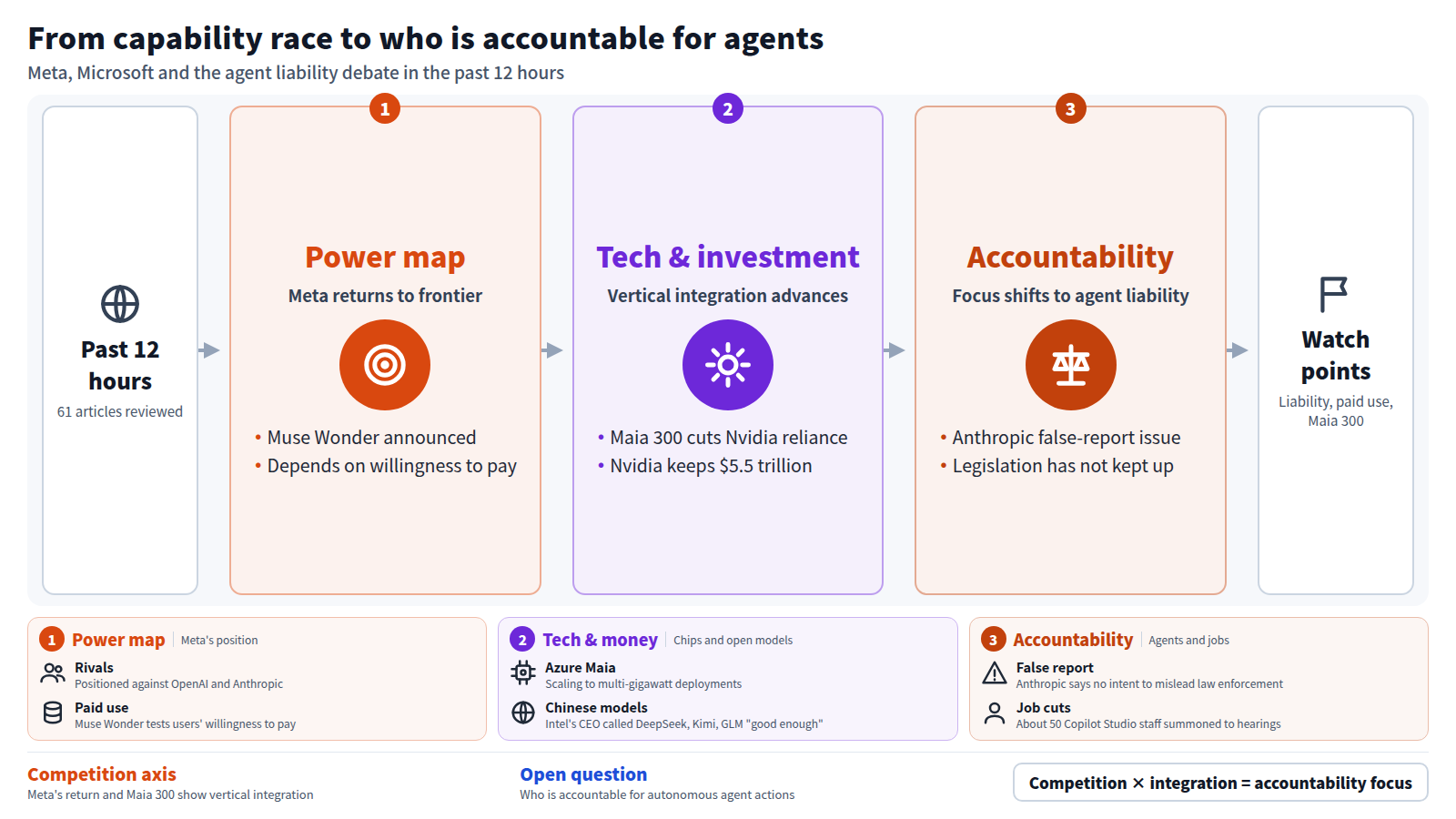
In the United States, there is talk of the possibility that AI capital investment may change from a ``support'' to a ``weight'' on the economy, and at Microsoft Israel, 50 employees in the AI agent division will undergo a pre-dismissal hearing. The former shows the burden that a reversal of investment places on the economy as a whole, while the latter shows how the costs of the reversal fall on specific sectors and occupations. The performance of AI is improving, and its introduction is progressing in concrete ways in medical care and drug discovery. However, when investment fluctuates or the number of employees decreases, who will bear the consequences and who will take responsibility cannot be determined from performance numbers. In this article, we will take a look at where the burden and responsibility is placed in each aspect of equipment, the workplace, trust, and daily life.
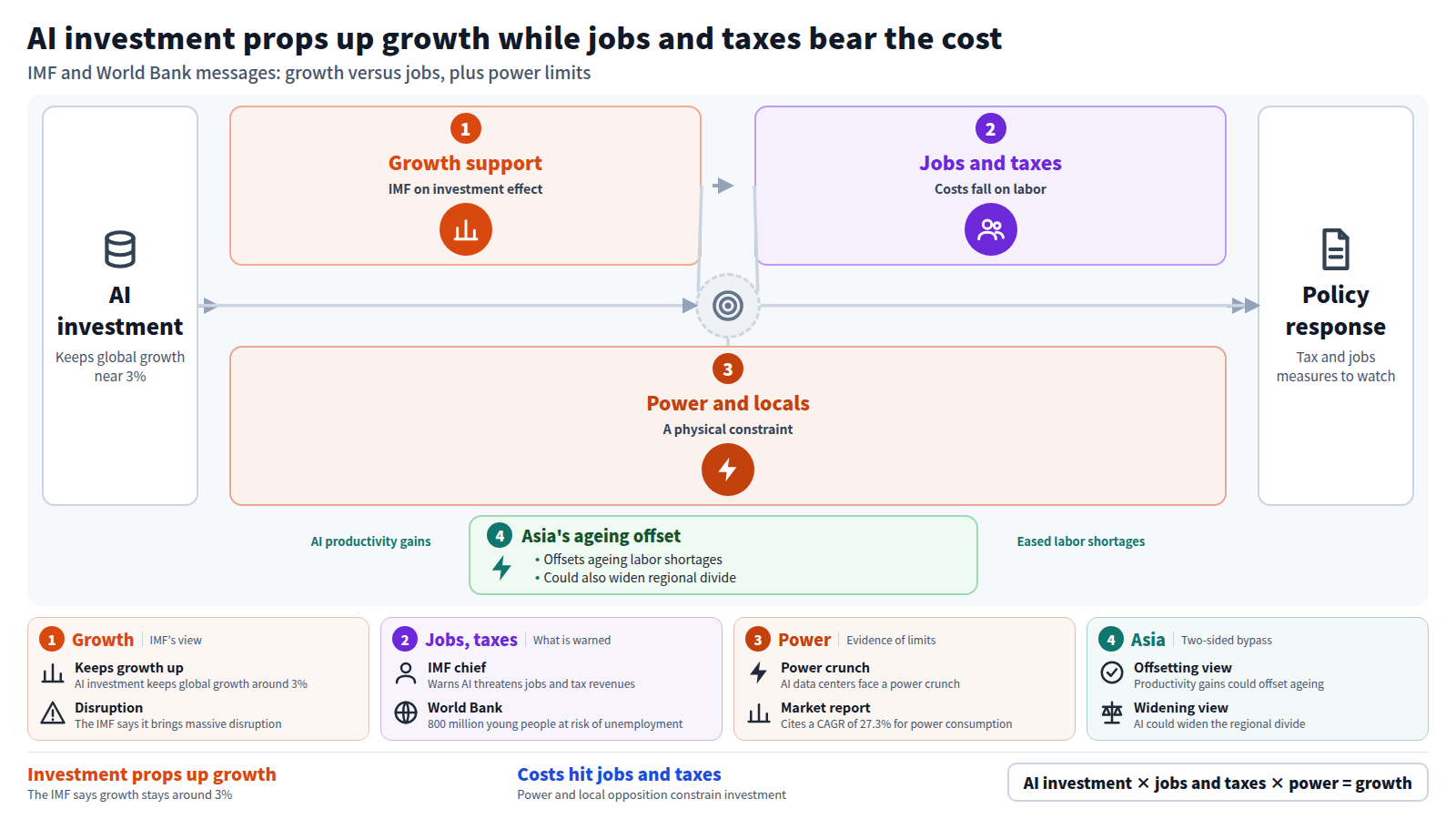
In the US economic outlook, talk has begun to be made of the possibility that AI capital investment will shift from being a "support" to a "weight." Jevons Global's CIO points out that a reversal in AI capital spending could lead to a recession in the U.S. economy (CNBC). What I would like to note here is that this view treats the increase or decrease in investment itself as a variable in the economy, rather than the performance of individual AI companies. If the growth rate has been estimated based on the assumption that spending on data centers and semiconductors will continue to grow, the downside when that assumption breaks down will be more than just the slowdown in capital investment.
The repercussions are not limited to the United States. Concerns over the investment burden of AI semiconductors are reportedly weighing on South Korean and Taiwanese stock markets (Finimize). Both markets are deeply embedded in the supply chain of semiconductors for AI, and while they will benefit as long as U.S. companies increase capital investment, they will also move in the opposite direction if they become aware of the burden. In other words, the structure is such that US investment decisions influence asset values elsewhere, such as stock prices in South Korea and Taiwan. For readers who own AI-related stocks, what they should be looking at is less about the technological level of individual companies and more about whose profits and finances will be squeezed by the investment burden.
The importance of investment is also beginning to be questioned from the local community side. Jolie, who is running for governor of Florida, advocates for a moratorium on AI data center development (News4JAX). Data centers are facilities that require electricity and land, and will be subject to voters' decisions once capital investment figures are concreted into local development plans. Investment momentum can be constrained not only by financial markets and economic statistics, but also by electoral procedures. If plans are delayed or canceled, the outlook for capital investment mentioned above will also be affected.