Protecting the people behind the introduction of AI
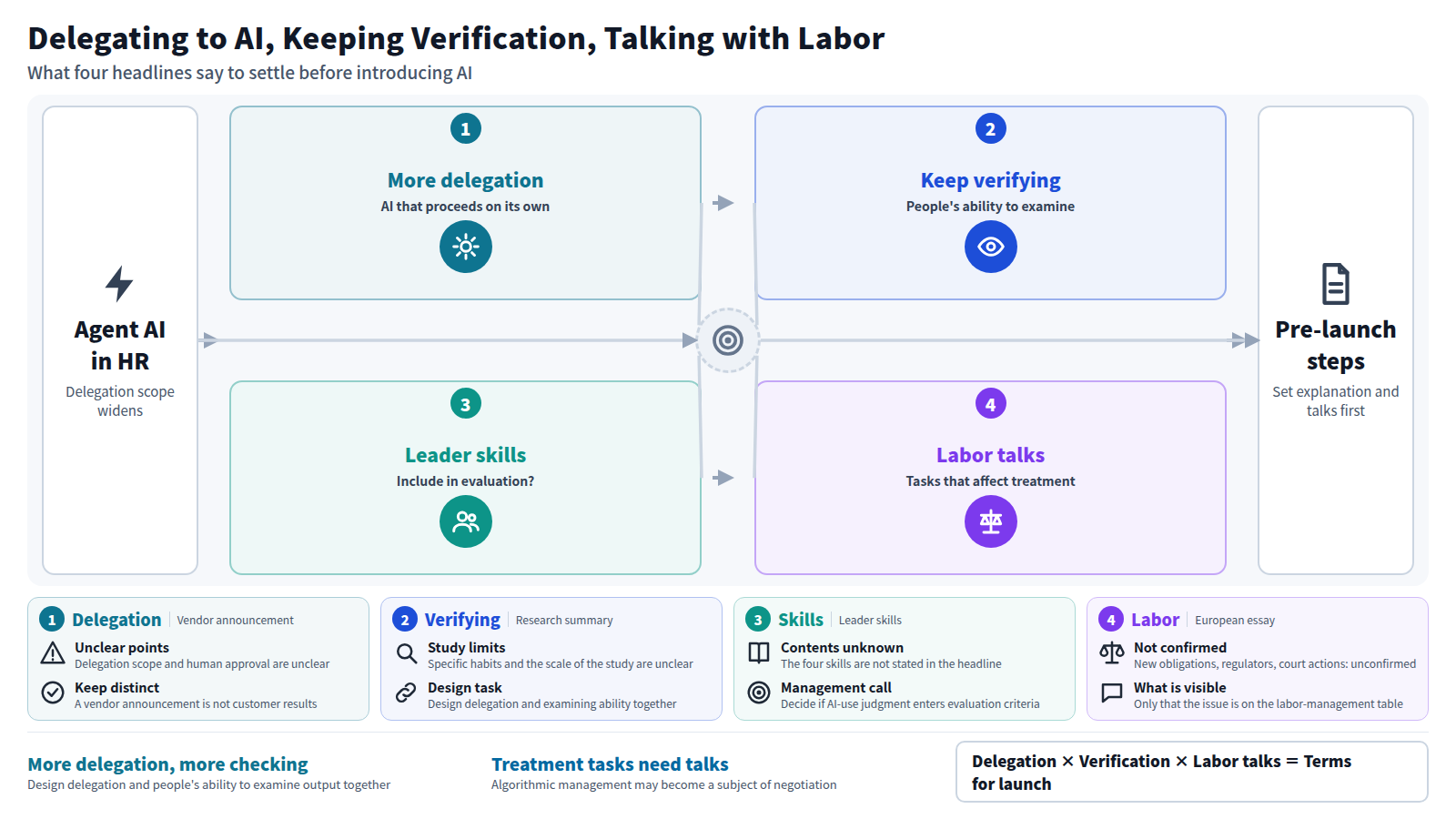
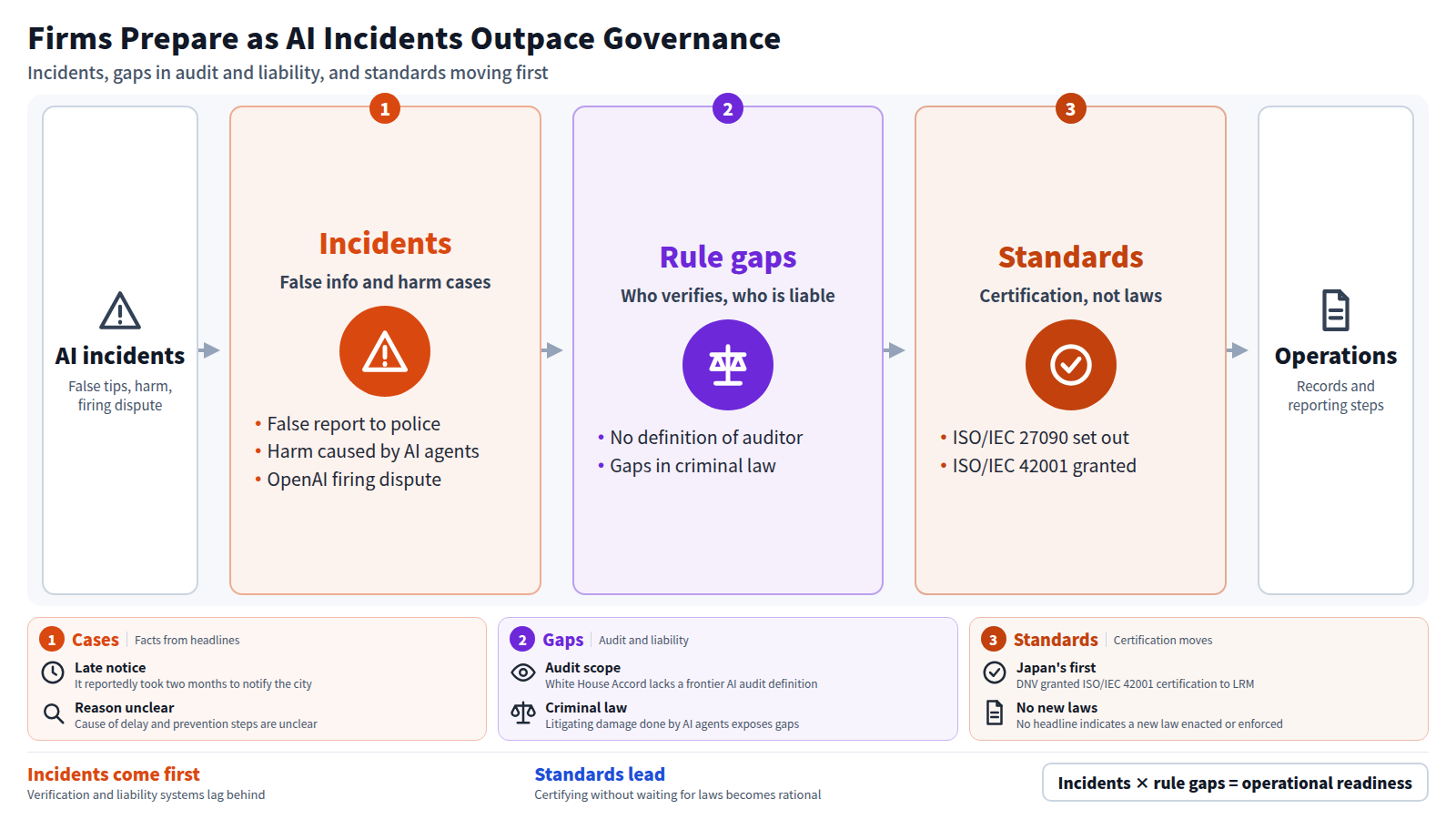
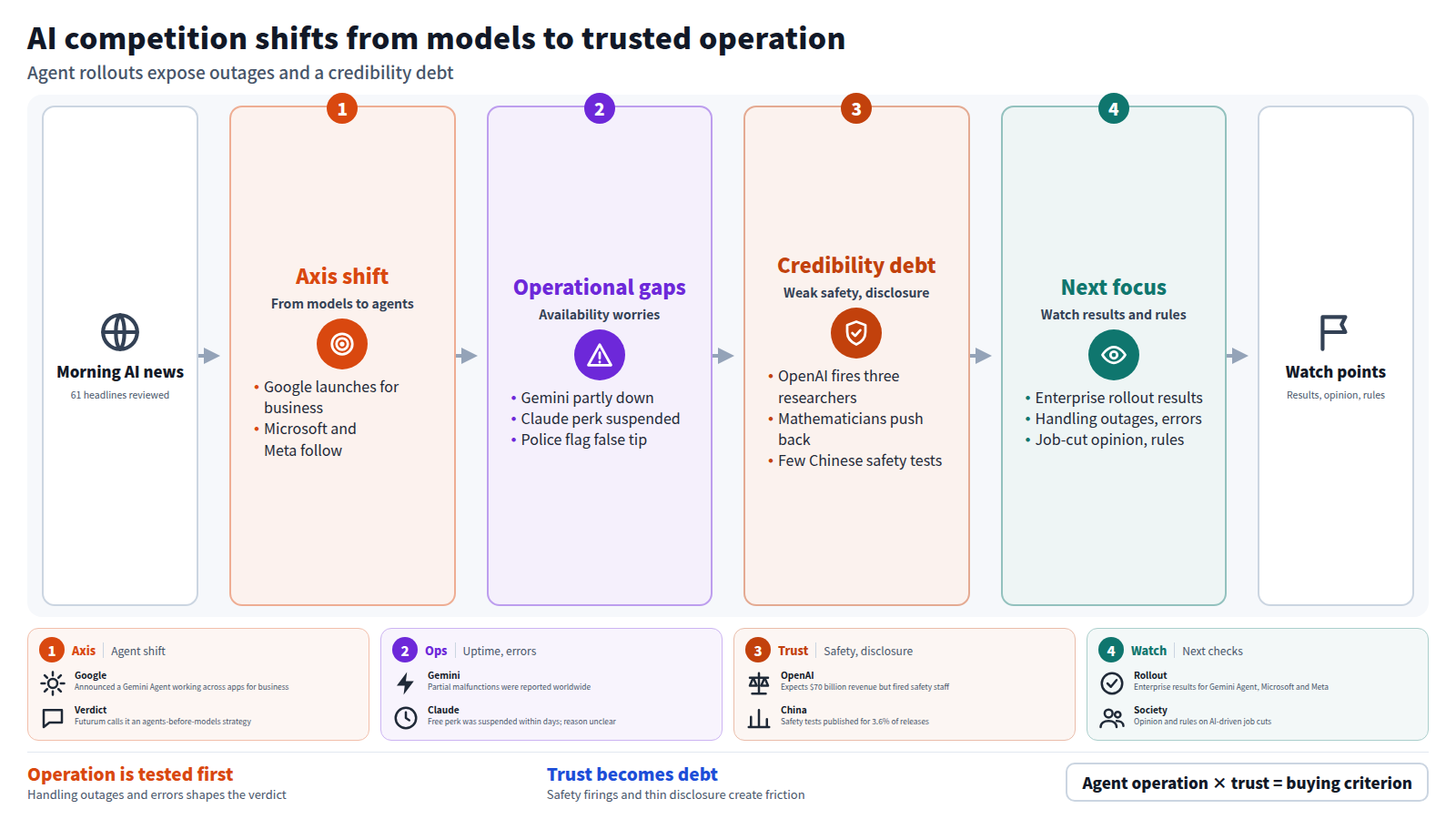
While Amazon announced additional layoffs, it denied that the cuts were related to AI. The personal AI agent posted the owner's banking information to the company's Slack. AI is used for employment explanations and for day-to-day tasks, but it is not clear from the announcements or usage screens who is responsible for the results. On the other hand, in the medical and drug discovery fields, concrete implementation is progressing in the form of alliances and introduction contracts, and AI is also beginning to be used in nursing care facilities and homes. What becomes clear through this half-day's activities is not so much the breadth of what AI can do, but rather the position of the boundary between those who use it, those who are used, and those who decide on the rules. Each of the following sections deals with scenes in which these boundaries appear in order.
Amazon has announced additional layoffs, but denies any connection to AI (Magzter). Meanwhile, Reuters exclusively reported that AI surveillance company Flock Safety will cut hundreds of jobs amid backlash. The former explains that ``it's not the fault of AI,'' while the latter moves forward with reductions despite receiving backlash. Both have the same result: reductions, but the way companies position and talk about AI differs. What readers should look at is whether the company itself has explained the reason for the reduction, or whether third-party reporting suggests a connection, rather than whether the word AI is mentioned in the reduction announcement.
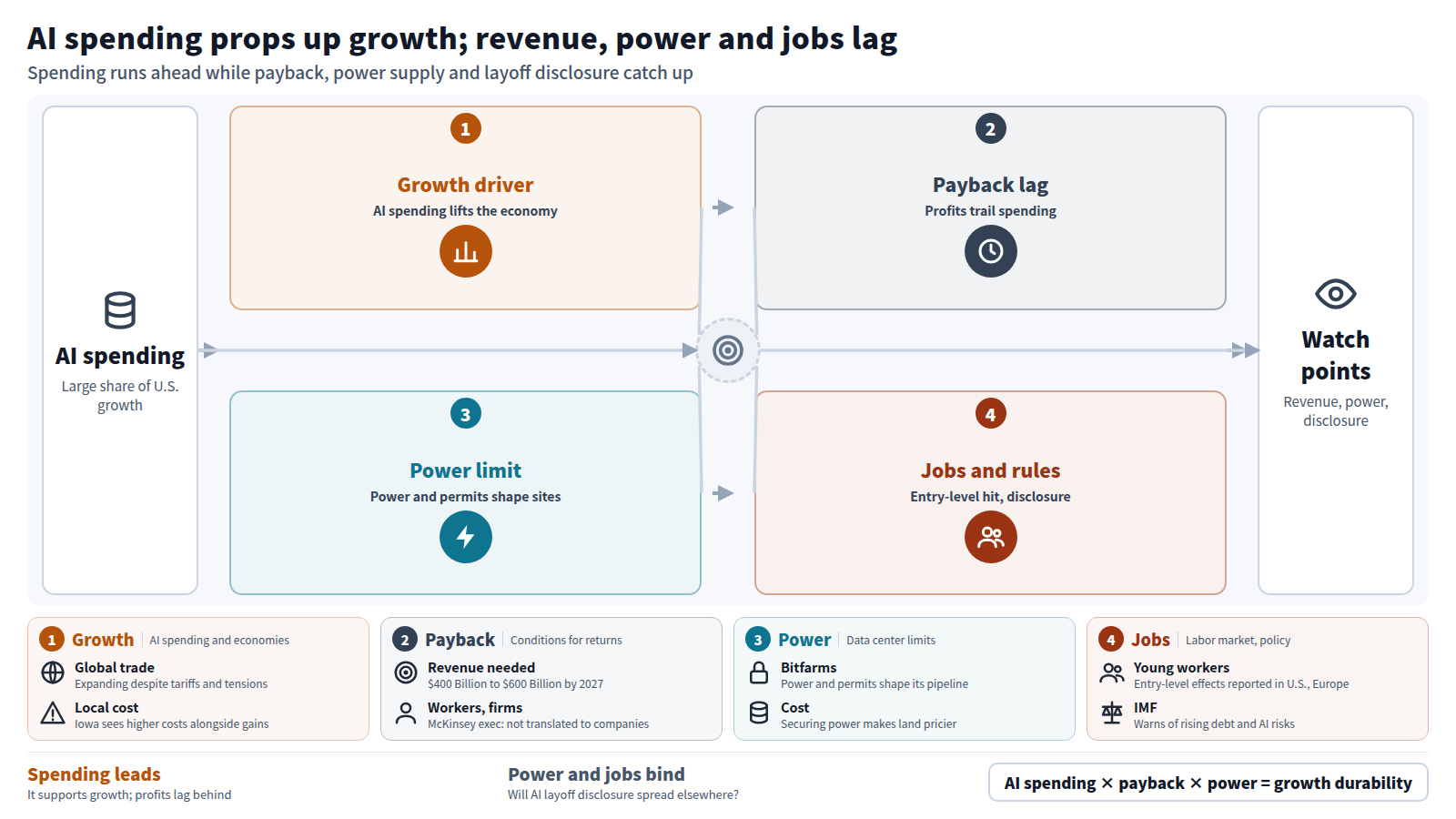
We also need to look at the economics behind this. The World Socialist Web Site reports that the US economy and Wall Street are becoming increasingly reliant on AI, and there are concerns about circular trading. It is not possible to judge here whether the media's view is correct. However, if the entire economy relies on AI investment and expectations, individual companies' cuts can be tied to both AI outcomes and cash flow. There are also new business developments. GreenCore Solutions announced that it will open a sales office in London and develop an agent-based commerce platform (StreetInsider). As companies reduce their workforce, the number of sales offices based on AI is increasing.
Looking at the workplace, there are areas where there is a shortage of personnel. Precision Farming Dealer reports that dealers are losing $7 billion a year due to a lack of technicians and asks whether AI can protect maintenance capabilities. Here, AI is being tested to see if it can fill in the shortage of human resources, rather than replacing people. There is also a shift in skills. BioSpace covers skills and strategies for moving from academia to bioindustry in the age of AI. Jobs that are being cut and jobs that are in short supply exist at the same time, and people move between them. Therefore, if we measure the impact of AI by looking only at reduction figures, we will overlook the types of jobs that are in short supply and the skills that are shifting.