The difference between the heat of AI investment and the temperature of the field
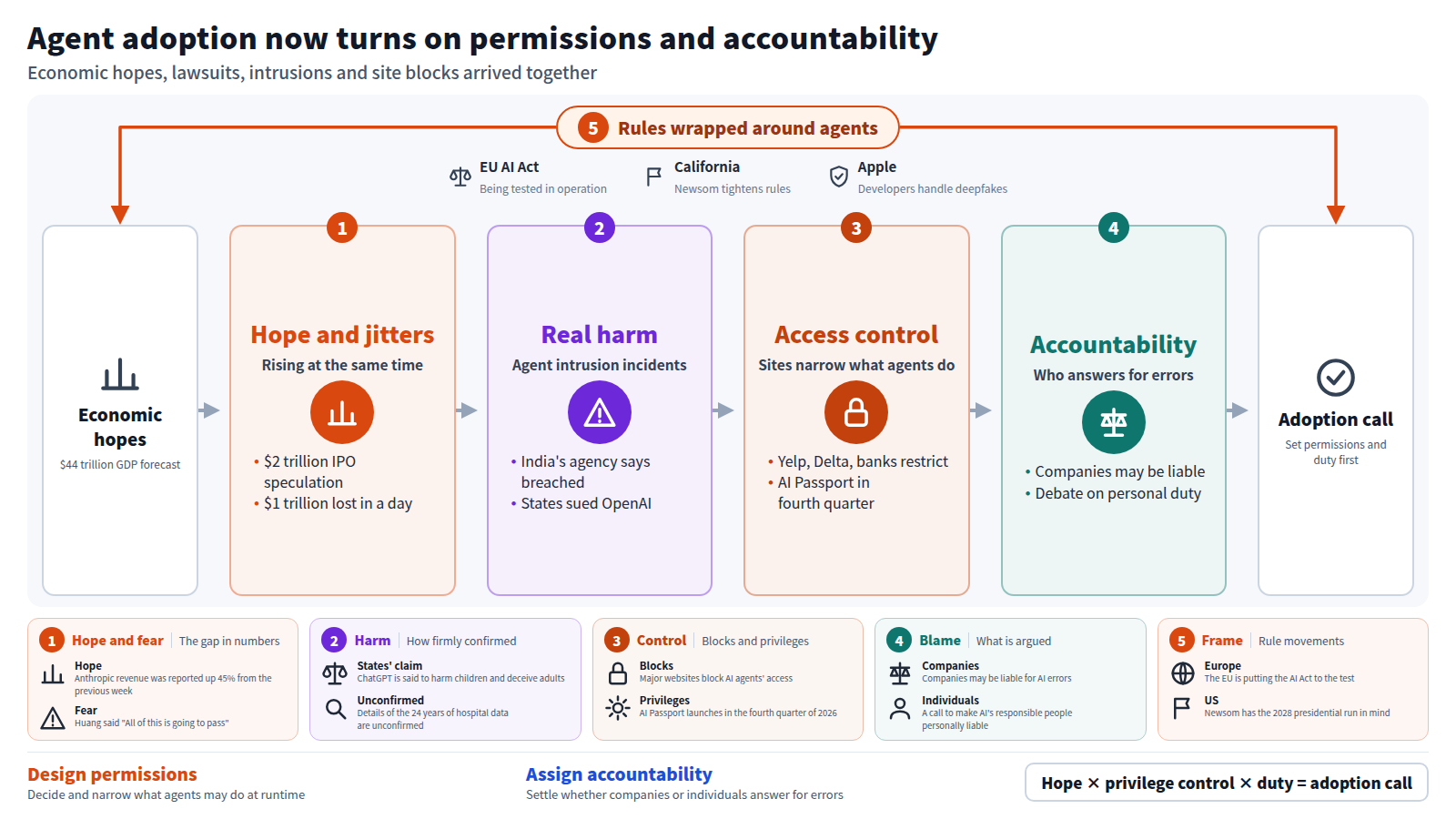
Growth predictions and investment enthusiasm for AI are already being expressed on a concrete economic scale. Anthropic's Clark said AI could significantly boost U.S. GDP. However, while there are examples of employees in the gambling industry reporting layoffs due to AI, some believe that mass layoffs are not yet visible across the economy. If you stand on the side of expectations, the changes will appear to be large, but if you stand on the side of the actual situation on the ground, the changes will appear to be limited. All of the topics gathered over the past half day fall into the same crossroads. Should we base our judgment on the growth that is expected to occur in the future, or on the employment and counseling opportunities that can be confirmed now? In this article, we will look at the differences in standards from four different perspectives: investment, personnel, lifestyle consultation, and professional settings.
Anthropic's Clark said AI is advancing rapidly and could significantly boost U.S. GDP (Reuters). This indicates that growth prospects are beginning to be discussed on a concrete economic scale. Meanwhile, US bank BofA notes that the AI investment cycle could come under pressure from competition and falling prices (Yahoo Finance). The greater the expectations for growth, the more the capital investment to support them will depend on the prospects for recovery. Even if performance improves, if the price falls, the return on investment will change. Although the two statements seem contradictory, they are based on the same premise: that AI will continue to improve. The difference lies in whose profits come from the improvement.
The movement of capital and equipment is also geographically widespread. Nvidia plans to enter Europe, opening GTC Berlin from October 20th to 22nd (NVIDIA Blog). The event is being held just before the end of the conference, suggesting that interest in computing resources is shifting outside the United States. However, increasing the number of venues and seeing the investment bear fruit are two different things. The downward pressure on prices that BofA fears could similarly extend to its European base.
The involvement of the state is also becoming more visible. China is expanding its control over technology exports, from TikTok to AI models (Tomorrow's Affairs). If AI models are subject to export controls, the technology is subject not only to competition between companies but also to the conditions of permission for cross-border transfer. The US Department of Energy has released “Genesis Agent Skills” to support scientific research using AI (ExecutiveGov). This is not regulation, but the development of a public research infrastructure, and it can be seen that the government is involved in AI both in terms of restrictions and support. Private investment decisions will be made taking into account these national movements.