AI & Finance News — 2026-10-09 (Fri)
Source links point to the original outlet. The AI Integrated Analysis is auto-generated from the headlines below only and is not intended to add facts beyond them. Not investment advice.
Overview
Wariness against AI attacks and the penetration of AI agents into financial practices have simultaneously progressed. CrowdStrike has pointed out that Chinese AI tools were used in attacks targeting South Korean banks (The New York Times), and the Financial Services Agency is reportedly planning to have a record 181 financial institutions participate in cyber defense exercises based on AI attacks (Yahoo! News). Meanwhile, it was also reported that AI agents are moving deposits (PYMNTS.com).
Bank trends
There was a report that an AI agent was moving a “dormant” deposit of $1.6 Trillion (PYMNTS.com). Although major banks are leading the AI race, it has been pointed out that it is difficult to see any returns in terms of profits (CU Today). Alkami and Bank Director discussed how to move AI from ideation to disciplined execution (PR Newswire). Goldman Sachs praised Palantir for its unique strengths in the AI boom (Barron's). Ogaki Kyoritsu Bank has built an unstructured data management platform for the use of AI (ZDNET Japan).
Insurance trends
AI-related debt is flowing into assets that are difficult for insurance regulators to track (Forbes). The question is whether AI shopping agents will impact personal insurance and spill over into commercial insurance for small businesses (Insurance Business). EverQuote releases white paper on personal AI agents and the future of property/casualty insurance sales (Quiver Quantitative), and Damco expands AI capabilities for property/casualty insurance (Yahoo Finance). In the UAE, Shory has launched an AI agency for car insurance (Beinsure).
Trends in asset management and market transactions
HSBC cuts wealth management jobs as AI increases customer-facing roles (Computer Weekly) Balyasny Asset Management has introduced Google Gemini to its research AI platform (The TRADE). Sequoia-backed Catalyst has raised $30 million to develop an AI buying and selling agent for retail investors (Fortune). Wall Street expects sustained demand for AI semiconductors amid Meta buzz (Los Angeles Times). There are reports that Oracle stock is lagging behind other AI stocks (Investor's Business Daily).
Fintech/payment trends
Mastercard discussed the issue of identity verification in agent-based transactions: "Who is behind the AI agent?" (Mastercard). Amex provides advice to companies on the use of AI (Payments Dive). BNP Paribas and BNY are reimagining banking with AI with help from Google (FinTech Magazine). FCA's David Geale spoke about crypto asset regulation, agent AI responsibilities and open finance (FinTech Futures).
Remarks from key figures and authorities in the financial world
JPMorgan Chase CEO Jamie Dimon was reported to have said that Anthropic's Mythos model increased cybersecurity risks tenfold (Tekedia). The other targets being tracked (Larry Fink, Jane Fraser, David Solomon, Brian Moynihan, Ted Pick, Ken Griffin, Paul Atkins) have no headline statements or actions. Goldman Sachs also expressed the view that AI will enable newly hired financial professionals to take on managerial roles from day one (The Times of India). However, this is the company's opinion, and it cannot be confirmed from the headline that it is David Solomon's personal statement.
Trends in AI-related stocks and funding
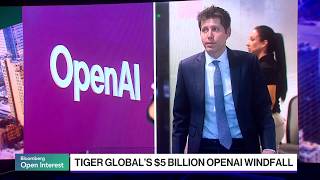
Manus raises $500 million after acquisition by Meta is blocked by China (Tech Xplore). Cal AI's 19-year-old founder has raised $10 Million for his new AI startup (TechCrunch). NeoCloud's IPO of $4 bln was volatile and reportedly sparked AI bubble fears (Breakingviews). As the U.S. midterm elections approach, some say that popular AI-related stocks and defensive stocks are most at risk (Bloomberg.com). Investment in OpenAI boosts Tiger Global's hedge fund performance (Bloomberg Television). Charles Clough said AI is different compared to the dot-com bubble and said we should focus on hyperscalers (CNBC Television).
Trends in financial regulation and supervision
The Financial Services Agency will implement AI management guidelines for financial institutions in October 2027 (NNA ASIA). At the same time, a cyber defense exercise based on AI attacks has begun, with a record 181 financial institutions, including banks and securities companies, scheduled to participate (Yahoo! News). The FCA has raised the issue of agent AI liability (FinTech Futures). UK Finance discussed how AI threatens the three elements of compliance: clarity, transparency and security (UK Finance). Sri Lanka's SEC has urged citizens not to invest in Quantum AI Limited (Adaderana Biz English).
Integrated analysis: What is happening now
Funds flow in two directions. One is the change in customer touch points, where AI agents begin to drive deposits ($1.6 Trillion) and insurance comparisons and purchases.The other is the provision of funds for AI investments, such as neocloud IPO and Manus procurement, and the inflow of AI debt into insurance assets (PYMNTS.com, Insurance Business, Forbes, Breakingviews, Tech Xplore). There are three sources of risk. First, on the cyber front, the Dimon warning, CrowdStrike report, and Financial Services Agency exercise point in the same direction. Second, the points of contention between Mastercard and FCA overlap regarding identity verification and responsibility for agent transactions. Third, AI debt enters into insurance assets, making it difficult for regulators to grasp. In Japan, the framework for regulations is being put in place with management guidelines and exercises that will come into effect in October 2027, and in the UK, it is expected that the theory of responsibility will be sorted out. In terms of personnel, there are indications that HSBC is cutting jobs and that the financial career ladder is collapsing, and changes in the workforce composition due to AI may be a reality.
Future points of interest
- Establishment of rules for identity verification and responsibility sharing in the event that deposit transfers and insurance purchases by agents become widespread (Mastercard, FCA). - Moves by regulators to understand and disclose the inflow of AI debt into insurance assets (Forbes). - Results of the Financial Services Agency's exercise and the specific content of the AI management guidelines scheduled to come into effect in October 2027 (Yahoo! News, NNA ASIA).
- AI Agents Wake Up $1.6 Trillion in Sleepy Bank Deposits — PYMNTS.com10/08 17:34 UTC
- Alkami and Bank Director Discuss How Banking Leaders Can Take AI From Ambition to Governed Action — PR Newswire10/08 14:00 UTC
- These Banks Are Leading The AI Race—But Where’s The Payoff? — CU Today10/08 16:31 UTC
- Palantir Stock Has a Secret Weapon in the AI Boom, Goldman Sachs Says — Barron's10/08 14:10 UTC
- AI Debt Is Flowing Into Assets Insurance Regulators Struggle To Track — Forbes10/08 15:25 UTC
- AI shopping agents are coming for personal lines. Is small commercial next? — Insurance Business10/08 15:24 UTC
- Damco Expands AI Capabilities Into P&C Insurance Solutions — Yahoo Finance10/08 15:20 UTC
- EverQuote Publishes White Paper on Personal AI Agents and the Future of P&C Insurance Distribution — Quiver Quantitative10/08 17:40 UTC
- Insurtech Shory launches AI insurance agent for car insurance in the UAE — Beinsure10/08 16:36 UTC
- Balyasny Asset Management brings Google Gemini into AI research platforms — The TRADE10/08 14:32 UTC
- AMMP launches AI coworker for renewable energy asset managers — Solar Power World10/08 12:33 UTC
- Docupace: Interview With Chief Of Staff Ryan George About Wealth Management Operations, AI And The Autonomous Practice — Pulse 2.010/08 11:12 UTC
- Sequoia-backed Catalyst raises $30 million to build AI trading agents for everyday investors — Fortune10/08 11:31 UTC
- Meta’s Muse is hot now. Wall Street sees lasting demand for AI chips — Los Angeles Times10/08 16:02 UTC
- Oracle Stock Underperforming Other AI Names Sets Up This Option Trading Strategy — Investor's Business Daily10/08 15:59 UTC
- What Wall Street’s Biggest Bank Is Quietly Saying About The Biggest AI Capex Spenders — Yahoo Finance10/08 16:45 UTC
- Who’s behind the AI agent? Solving the identity challenge in agentic commerce — Mastercard10/08 16:08 UTC
- Amex advises businesses on AI — Payments Dive10/08 14:44 UTC
- Google at Sibos: BNP Paribas and BNY Rewire Banking with AI — FinTech Magazine10/08 16:25 UTC
- Interview: The FCA's David Geale on crypto rules, agentic AI liability, and open finance — FinTech Futures10/08 15:14 UTC
- Cal AI’s 19-year-old founder just raised $10M for his new AI startup — TechCrunch10/08 14:00 UTC
- AI Darlings, Defense Shares Most at Risk as US Midterms Near — Bloomberg.com10/08 12:06 UTC
- Jeff Bezos Says He Usually Tells Retired Investors To Buy The Same Thing, And It’s Not Just AI Stocks — Yahoo Finance10/08 09:43 UTC
- Clarity, transparency, security - is AI threatening the compliance trifecta? — UK Finance10/08 09:52 UTC
- AI could turn fresh finance hires into managers from day one: Goldman Sachs — The Times of India10/08 09:53 UTC
- AI and Middle Management Face a Break in Finance’s Career Ladder — Urban Acres10/08 09:06 UTC
- SEC SL Urges Public Not to Invest Funds with Quantum AI Limited — Adaderana Biz English10/08 10:15 UTC
- Ogaki Kyoritsu Bank builds unstructured data management platform for AI use — ZDNET Japan10/08 07:51 UTC
- Financial Services Agency to implement AI management guidelines for financial institutions in October 2017 — NNA ASIA10/08 15:00 UTC

👥 Watchlist
Overview
It was reported that nine South Korean banks investigated a cyberattack suspected of involving AI, and a Chinese developer closed-sourced ``ARTEX'' and suspended its publication (Reuters, Channel NewsAsia). Meanwhile, AI-related stocks fell due to reports that OpenAI's annualized sales were lower than expected, and Firmus postponed its initial public offering (IPO) (SiliconANGLE, Bloomberg.com). As AI agents increasingly handle financial information, security, payment limitations, and where responsibility lies are becoming points of contention.
Bank trends
Nine South Korean banks are investigating cyberattacks that may involve AI (UA.NEWS via Channel NewsAsia). In response to this incident, Chinese developers closed-sourced their AI agent ARTEX (Reuters). Japanese news reports have also reported that ARTEX's suspension of publication was a response to attacks on South Korean financial institutions (Reuters). For individuals, there were reports of cases where personal AI agents posted bank account information on internal Slack, and issues where bank statements were shared in workplace chats (Business Insider, WSJ). The Central Bank of Vietnam has established new regulations regarding banks' use of AI, classifying risks into three levels (VIETJO Vietnam News).
Insurance trends
There was a commentary on the emergence of ``unbundled'' insurance companies, where insurance companies are separated by function within the value chain (Insurance Journal). KPMG noted that insurance companies face challenges in the return on investment (ROI) of AI (FutureCFO). It has been analyzed that insurance in Asia has entered a new risk phase surrounding post-retirement capital shortages, agent-based AI, and catastrophe coverage (Asian Business Review). China Life will invest US$670m in AI and semiconductor fields (Asia Insurance Review). In Ojai, residents are developing an AI system for affordable fire insurance (Ojai Valley News).
Trends in asset management and market transactions
In asset management, there was an article on how AI will change the future of wealth management and what registered investment advisors (RIAs) need to know before implementing AI in 2027 (Investment Executive, Wealth Management). Spending on AI analysis is putting pressure on asset management companies' research budgets (Financial News London). It was reported (Stocktwits) that NVDA will team up with major Wall Street companies to raise $500B in AI infrastructure funding. There was a view in the market that the cancellation of the IPO of a company in which Nvidia invested indicates the limit of the AI boom (WSJ). Asian stocks are generally up, with traders looking for AI ingredients and a fall in oil (Yahoo Finance). US stocks outperformed Asia, and bond yields rose amid swings in AI-related trading (Stocktwits). A guide to trading using machine learning was also published (The Globe and Mail).
Fintech/payment trends
The impact of AI on payments and the consequences if money becomes “agent-like” are discussed (American Banker, FinTech Futures). Splitit's CEO said AI agents need a complete picture of their financial situation before choosing pay later (PYMNTS.com). Sui has introduced “Agent Pass” which sets spending limits for AI agents (Altcoin Buzz). Cloudflare launches an AI payment gateway that charges agents fees for using digital resources (TechAfrica News).
Remarks from key figures and authorities in the financial world
The statements and actions of the key figures being tracked (Jamie Dimon, Larry Fink, Jane Fraser, David Solomon, Brian Moynihan, Ted Pick, Ken Griffin, and Paul Atkins) are not included in the headlines, and there are no notable developments.
Trends in AI-related stocks and funding
AI-related stocks plummeted following reports that OpenAI's annualized sales were significantly lower than expected, raising concerns about an AI bubble (SiliconANGLE, Bloomberg.com). Dow Jones futures rose after AI stocks fell (Investor's Business Daily). Firmus has postponed its initial public offering (IPO) (Bloomberg.com). In another video, OpenAI is expected to generate $70B in sales and Airtel Money is reportedly aiming for the UK's biggest IPO since 2021 (Bloomberg Television). Zach Yadegari raises $10 million for new AI startup (Nacionale News). An analysis by Seeking Alpha suggests that Nvidia is on the verge of a downturn due to the economic cycle and an AI bubble. There is also an article explaining Anthropic's listing (TradingKey).
Trends in financial regulation and supervision
AI-enabled announcements by the SEC, FCA, FSB, Financial Services Agency, etc. are not included in the headlines. Confirmed developments include the Central Bank of Vietnam's three-tier risk classification of banks' use of AI (VIETJO Vietnam News) and reports covering AI under legal regulation (Vietnam.vn). On the industry side, the question is whether AI-based compliance decisions can withstand audits by regulators (FinTech Global). "Go after the AI agents," says Cathie Wood, and ARK's disclosure documents show where the company is looking (24/7 Wall St.). Seven PCT international applications related to "responsible OS" related technology regarding the adoption of AI judgment have been completed (PR TIMES).
Integrated analysis: What is happening now
First, risk is shifting from model accuracy to agent authority management. The leakage of account information by personal agents, the attack on a Korean bank suspected of involving AI, and the suspension of publication of ARTEX show that the capabilities of agents can be used for both attacks and information leaks (Business Insider, Reuters). In response, mechanisms to control authority and compensation on the payment side seem to have emerged in parallel, such as Sui's spending cap and Cloudflare's billing gateway (Altcoin Buzz, TechAfrica News). Second, while funds are directed toward semiconductors and infrastructure, the underlying basis for profitability is shaky. China Life's investment and NVDA's $500B funding initiative indicate an influx of capital, but OpenAI's sales reports, Firmus' postponement, and Nvidia-backed companies' IPO cancellations suggest doubts about monetization are spilling over into the market (Asia Insurance Review, Stocktwits, SiliconANGLE, WSJ). Insurance and asset management companies are also facing issues with the ROI of AI and the burden of research budgets, suggesting a disconnect between the investment side and the profit side (FutureCFO, Financial News London). Third, regulation could move in the direction of risk classification and accountability. The central bank's three-tiered classification and the issue of AI judgments that can withstand audits by regulatory authorities seem to be a trend that calls into question responsibility rather than whether or not it can be used (VIETJO Vietnam News, FinTech Global).
Future points of interest
Will the results of the investigation into nine South Korean banks, whether AI is involved, and the method of attack become clear? 2. The impact of media coverage surrounding OpenAI's sales on AI-related stocks and future IPOs (post-Firmus deals, Airtel Money, etc.). 3. Will agent authority management (expenditure limits, billing, risk classification) in banking and payment be materialized as regulations and industry standards in each country?
- My personal AI agent posted my bank details on company Slack. It's made me rethink how I use it. — Business Insider10/09 08:43 UTC
- Personal AI Agents Are Great—Until They Share Your Bank Statement in the Work Chat — WSJ10/08 23:00 UTC
- Chinese developer makes ARTEX AI agent closed-source after Korean bank hack — Reuters10/09 01:56 UTC
- Viewpoint: The 'Unbundled' Insurer Emerges in Age of AI as Value Chain Fragments — Insurance Journal10/09 05:07 UTC
- KPMG: insurers face challenge on AI ROI — FutureCFO10/09 05:11 UTC
- Asia insurance enters a new risk cycle: Retirement gaps, agentic AI, and catastrophe cover — Asian Business Review10/09 03:35 UTC
- China Life to invest US$670m in AI and semiconductor sectors — Asia Insurance Review10/09 01:52 UTC
- TMRW: Ojai residents develop AI pathway for affordable fire insurance — Ojai Valley News10/08 21:40 UTC
- Inside the Minds of Asia Pacific Retail Leaders: Growth, AI and Execution — Boston Consulting Group10/09 07:39 UTC
- What RIAs Must Know Before Deploying AI in 2027 — Wealth Management10/08 23:53 UTC
- NVDA Teams Up With Wall Street Giants On Massive $500B AI Infrastructure Funding Push: Report — Stocktwits10/09 00:18 UTC
- AI analytics spend puts more strain on asset manager research budgets — Financial News London10/08 23:11 UTC
- Scrapped IPO of Nvidia-Backed Company Points to Limits of AI Boom — WSJ10/09 07:18 UTC
- Asian stocks mostly up as traders weigh AI, oil dips after surge — Yahoo Finance10/09 07:31 UTC
- Guy Gentile Introduces AI Trading Edge, a 25-Chapter Guide to Building Machine-Learning Systems for Real Markets — The Globe and Mail10/09 06:30 UTC
- How AI will impact payments — American Banker10/09 02:17 UTC
- Splitit CEO Says AI Agents Need the Full Financial Picture to Pick Pay Later — PYMNTS.com10/09 08:08 UTC
- What happens if money is agentic? — FinTech Futures10/09 04:33 UTC
- Sui Introduces Agent Pass to Set Spending Limits for AI Agents — Altcoin Buzz10/09 06:40 UTC
- Cloudflare Launches AI Payment Gateway to Charge Agents for Digital Resources — TechAfrica News10/09 08:33 UTC
- Watch OpenAI's Revenue Report Deepens AI Bubble Fears, Firmus Shelves IPO — Bloomberg.com10/09 06:42 UTC
- Dow Jones Futures Rise After AI Stocks Tumble On OpenAI News; SpaceX Move Slams Verizon, AT&T Late — Investor's Business Daily10/09 04:52 UTC
- AI stocks crumble on report that OpenAI's annualized revenue is much lower than believed — SiliconANGLE10/09 00:44 UTC
- Zach Yadegari Raises $10 Million for New AI Startup — Nacionale News10/09 05:23 UTC
- Nvidia: Caught Between Cyclical Downside Risk And AI Bubble — Seeking Alpha10/09 04:22 UTC
- Can your AI compliance decisions survive a regulator’s audit? — FinTech Global10/09 08:19 UTC
- Cathie Wood Says Follow the AI Agents. Her Own Filings Show Where ARK Was Looking — 24/7 Wall St.10/08 22:00 UTC
- What you Need to Know AboutClaude's Maker, Anthropic IPO — TradingKey10/08 22:50 UTC
- Chinese AI Tool ARTEX Suspended After Attack on South Korean Financial Institutions — Reuters10/09 04:29 UTC
- Generative AI Accelerates: Anthropic-Related Stocks — Japanese media10/09 05:49 UTC
- Vietnam Central Bank Issues New Rules on Banks' AI Use, With Three-Tier Risk Classification — Japanese media10/09 03:39 UTC
- AI Under Legal Regulation — Vietnam.vn10/09 08:11 UTC
- AI's Next Hurdle Is Whether to Adopt Its Judgments: Technology Group Centered on Responsibility OS Completes 7 PCT International Filings — PR TIMES10/09 03:50 UTC